Skip to content
Application field · EEG and brain–computer interfaces

ERP Studies (P300, SSVEP)

Event-related potentials · P300 · SSVEP

Stimulus-response paradigms with the P300 component and visual evoked potentials. g.tec's ERP solutions cover everything from research on cognitive load, attention and memory to clinical communication systems.

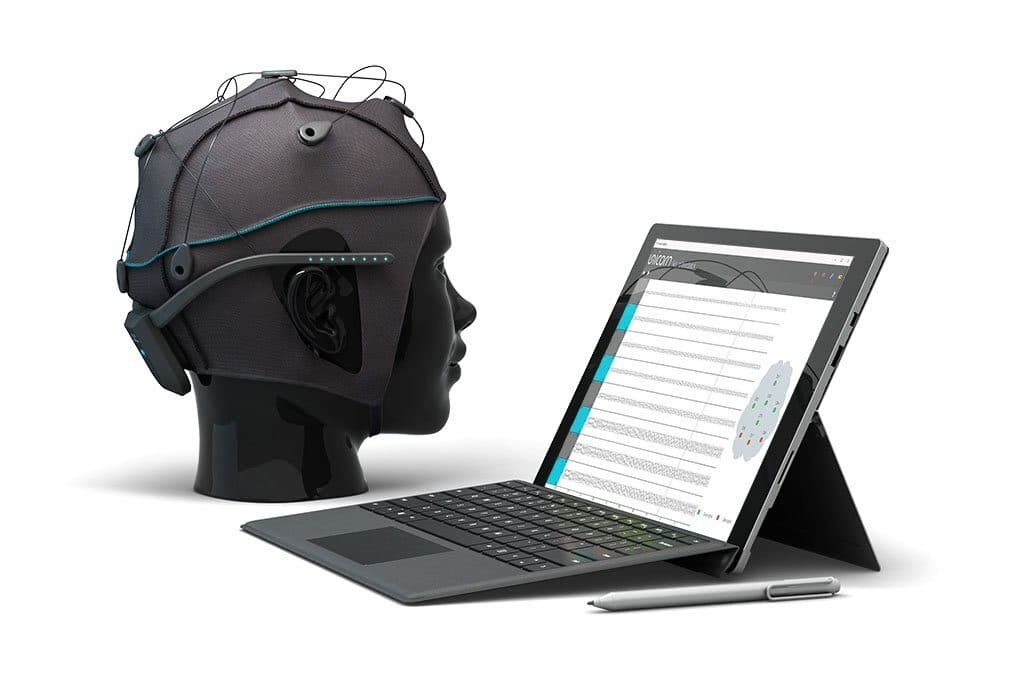
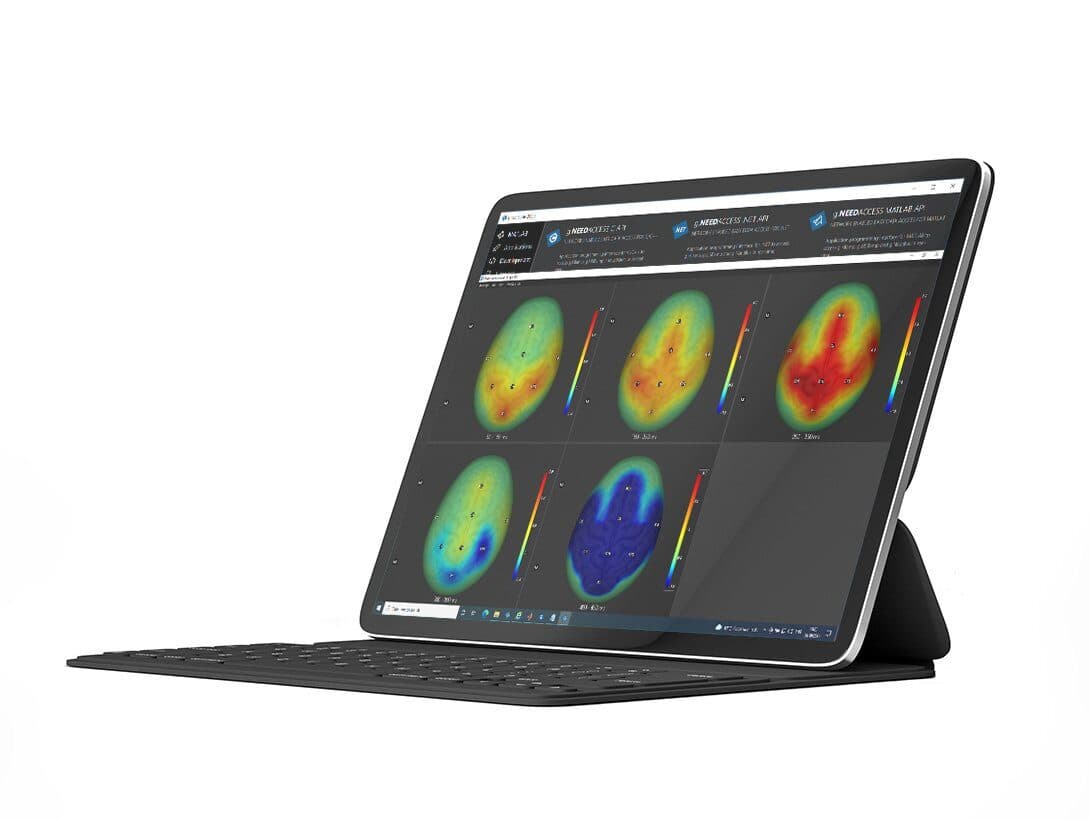
g.HIsys 3D evoked-potential maps on a tablet screen
What is an ERP?

Brain research with event-related potentials.

Event-related potentials (ERPs) are time-locked electrical activity that the brain produces in response to a specific stimulus. Measured with EEG at millisecond precision, these responses directly reflect the neural basis of cognitive processes.

g.tec's BCI environment provides three core ERP paradigms as ready-made toolboxes: P300, SSVEP and ERD/ERS (event-related desynchronisation/synchronisation). They are widely used both for communication systems and for basic neuroscience research.
The P300 BCI

Spelling and communication with P300.

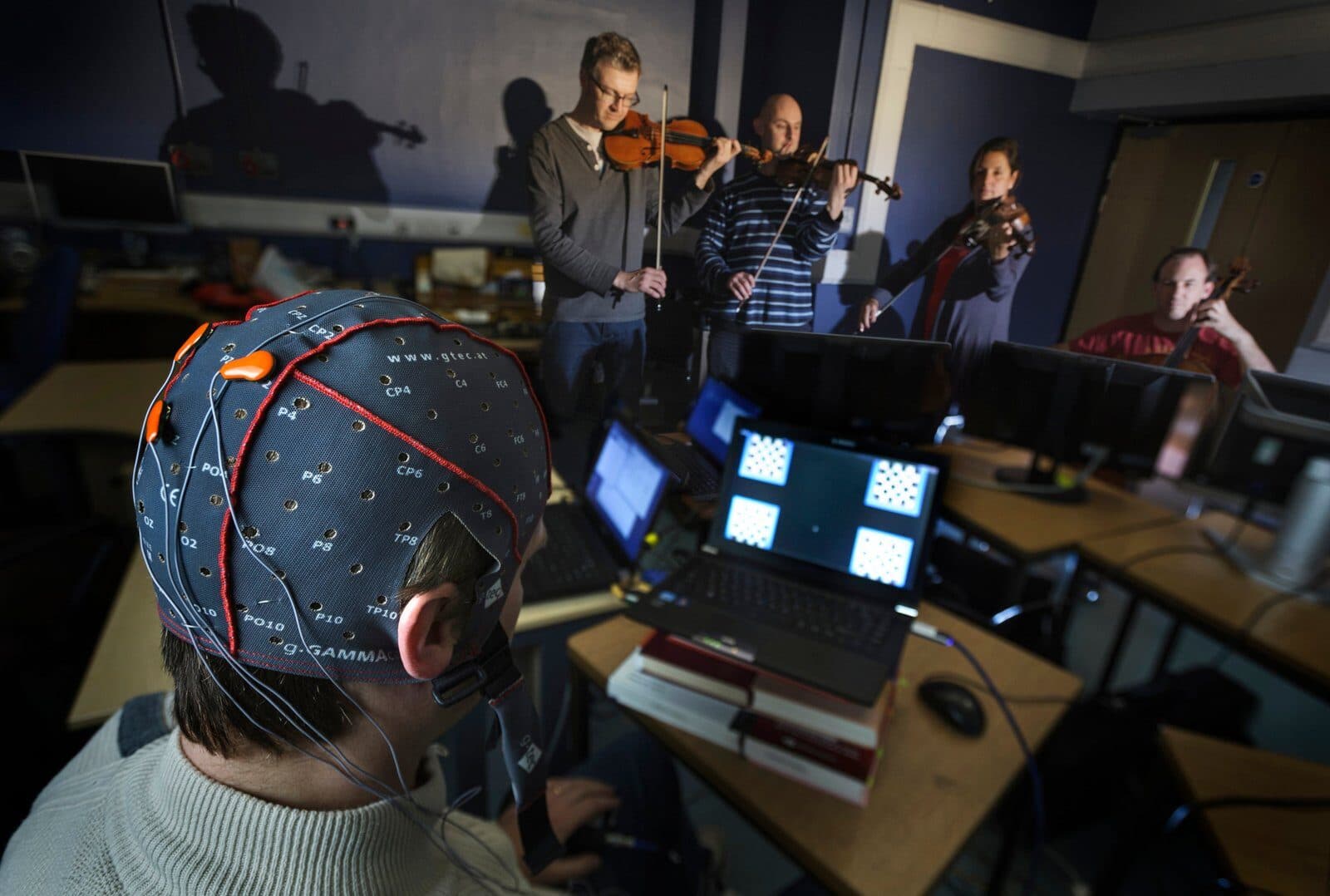
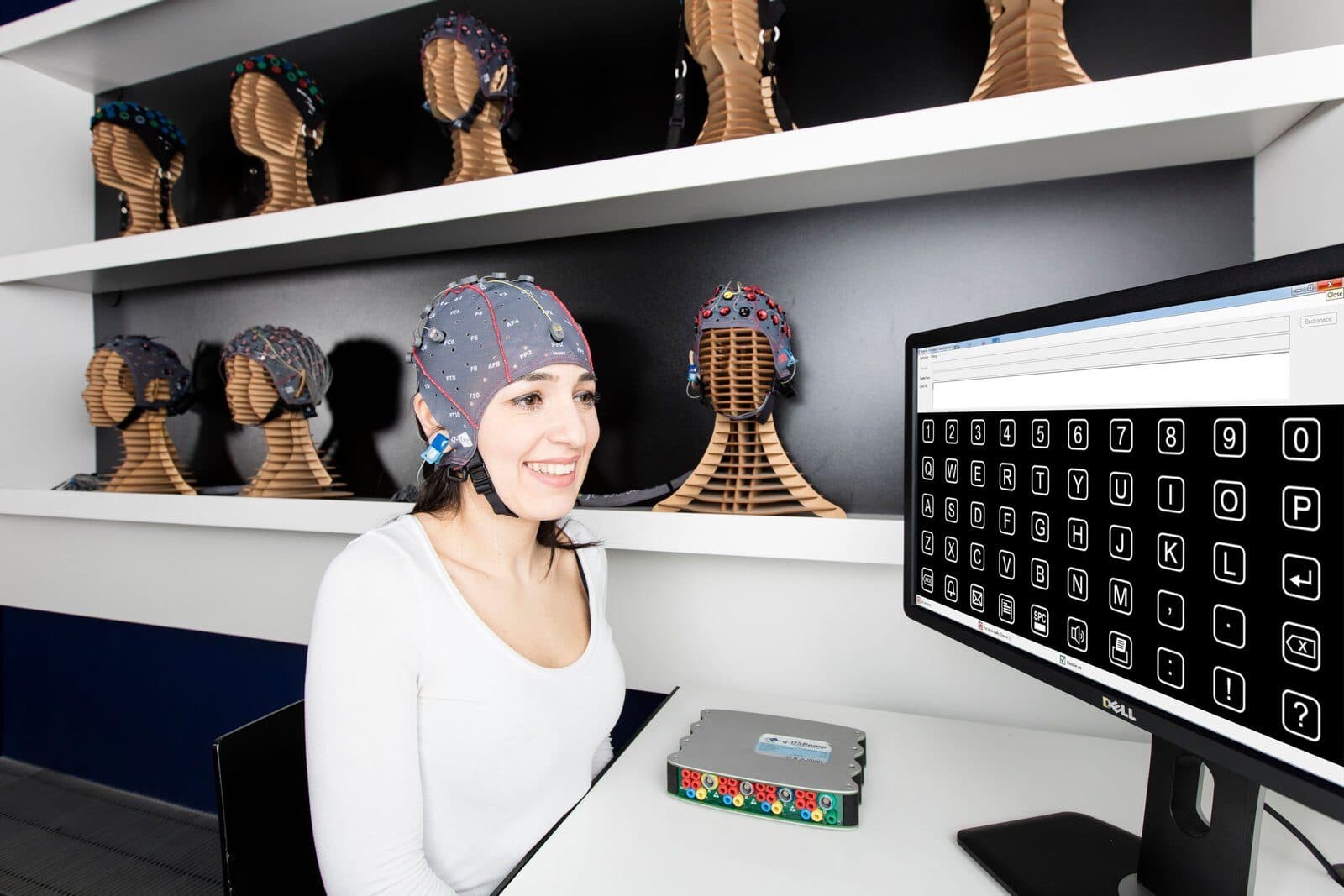
g.tec's P300 speller flashes the 36 characters of a 6×6 matrix in random order. While the user silently counts the target character, a P300 response forms in the brain; a real-time algorithm detects it and selects the target.

In a study by Guger and colleagues with 81 healthy participants, this method reached a classification accuracy above 99 percent. P300 BCI studies with dry electrodes have confirmed accuracy similar to gel-based systems. The intendiX system for patients with ALS and locked-in syndrome is built on this foundation.

  • Visual P300 toolbox
The SSVEP application

High-speed control with SSVEP.

g.tec's SSVEP toolbox turns focus on light sources, each flickering at its own frequency, into computer commands. When the user looks at no light, the system switches to “no control” mode; this zero-class feature is critical for safe use.

At the Ars Electronica Festival, a hexapod robot was controlled with the SSVEP paradigm on a g.tec system. In smart home, wheelchair and in-vehicle control applications, ITRs of up to 100 bits per second have produced results that the literature cites as benchmarks.

  • SSVEP toolbox
P300 and the smart home

Controlling a virtual smart home with P300.

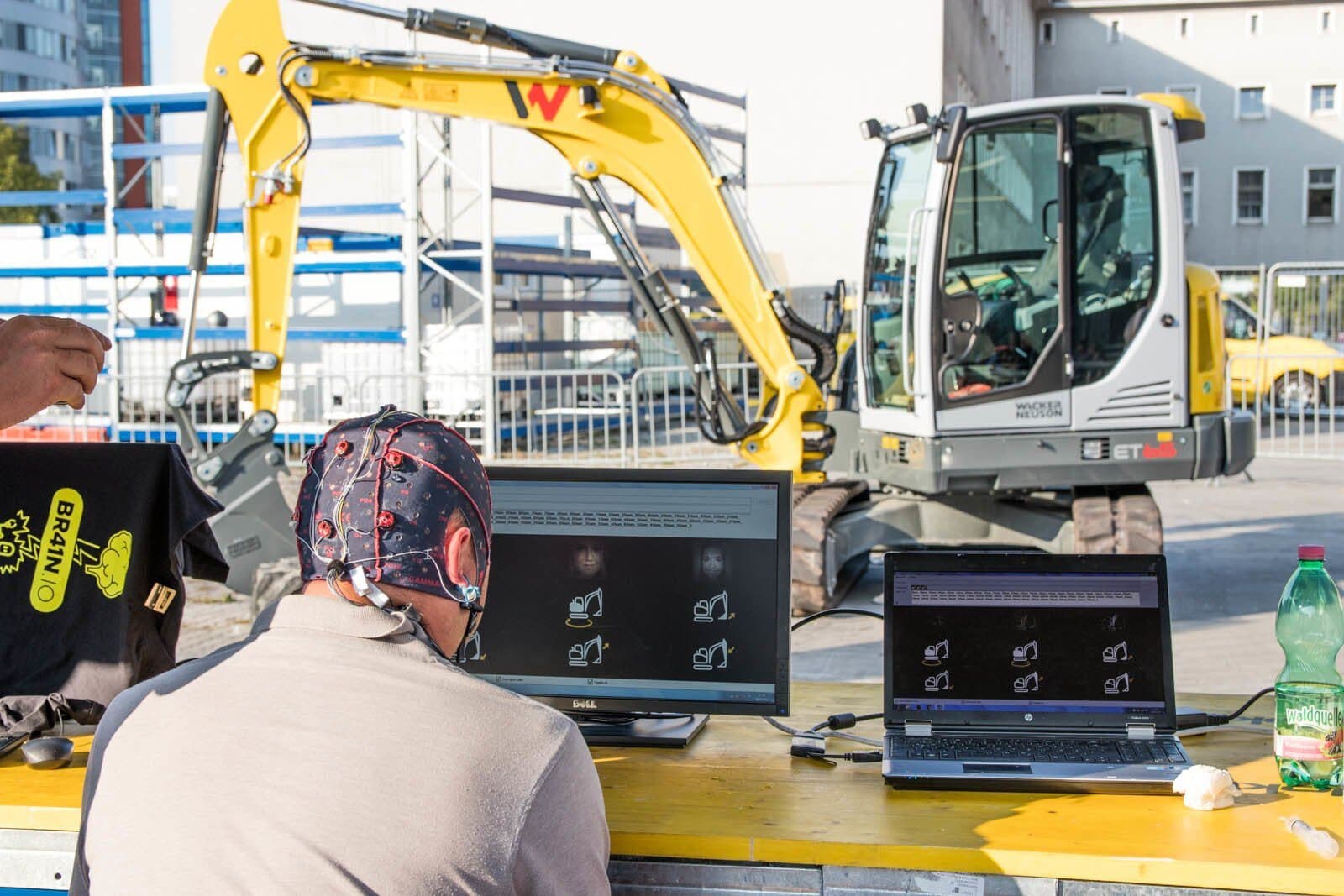
The g.tec BCI system controls a three-dimensional virtual home, with a TV, music, heating, windows and a telephone, through the P300 paradigm. Users can move through the virtual environment with seven different control masks.

In studies by Edlinger and Guger, P300 systems with 31 to 55 classes were tested, including in the Second Life virtual world, and reached high accuracy in real-world applications.

  • P300 Smart Home toolbox
High-density ERP and source localisation

P100, N170 and high-resolution ERP with g.Pangolin.

g.Pangolin is the world's first ultra-high-density electrode and biopotential amplifier system. With an electrode spacing of 8.6 mm it records up to 1,024 channels. This spatial resolution makes precise source localisation possible for ERP components that standard EEG systems cannot see.

Components such as P100 (early visual response), N170 (face processing), N200 (stimulus discrimination) and P300 can be mapped over the cortex at millimetre precision with g.Pangolin. Placing 24 electrode grids over the motor cortex records 384 channels from that region alone.

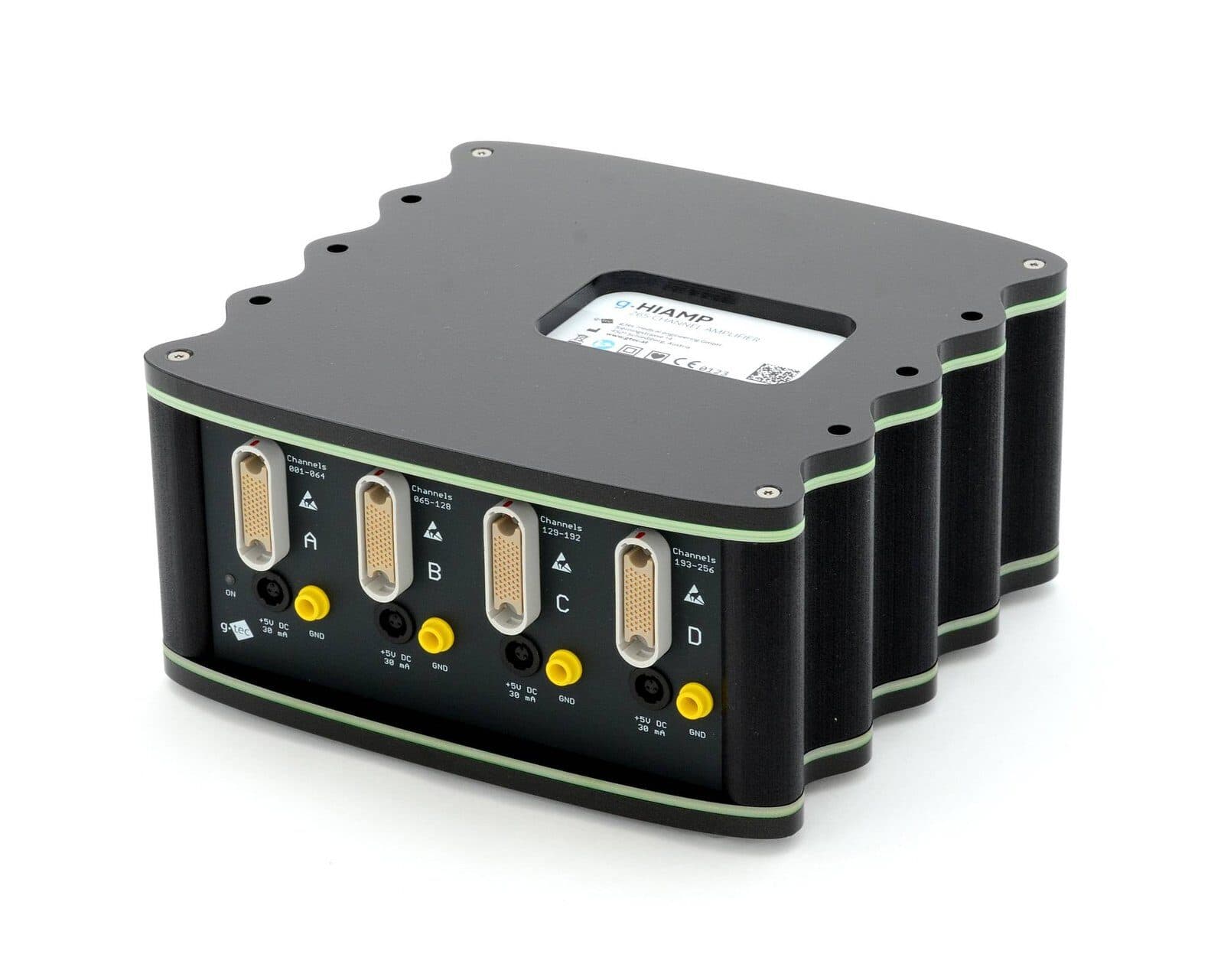
  • g.Pangolin + g.HIamp
The software ecosystem

Millisecond-precise stimulus timing and open integration.

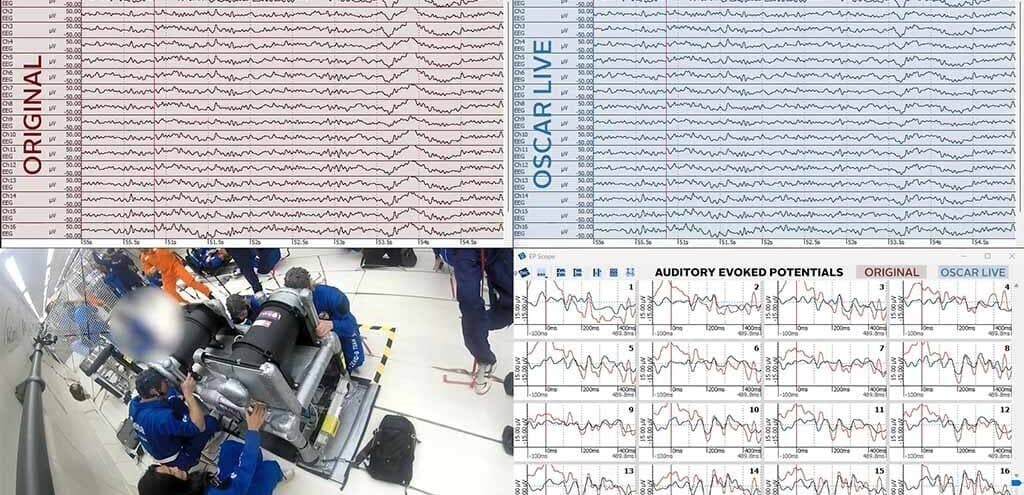
Paradigm Presenter, built into g.HIsys, lets you design ERP experiments at millisecond precision without separate stimulus presentation software. It runs stimulus timing and EEG recording in sync on the same computer; the OSCAR LIVE module removes blink and muscle artefacts in real time, and recordings pass to g.BSanalyze for offline analysis.

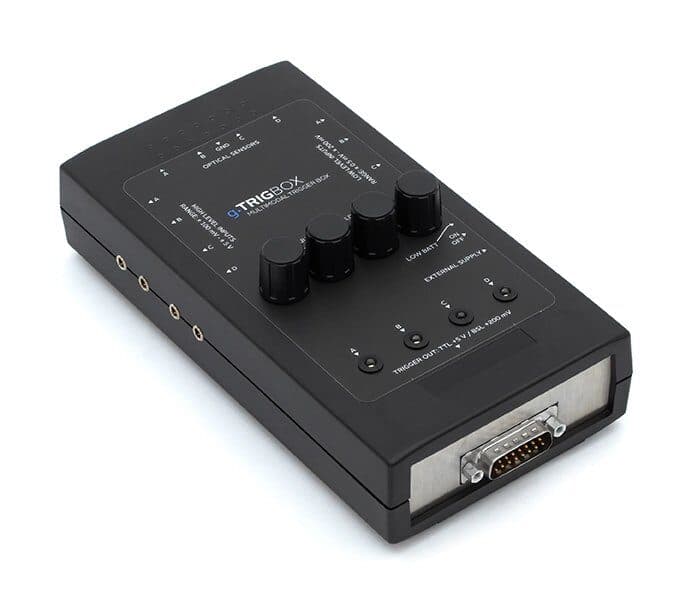
g.tec devices work with PsychoPy, Psychtoolbox/MATLAB, E-Prime and Presentation through TTL triggers via g.TRIGbox or a parallel port. g.Recorder data can be exported to EEGLAB/ERPLAB, BESA and EMSE Suite, and g.Pype's LSL output shares data with any LabStreamingLayer-compatible application.

  • g.HIsys Paradigm Presenter
  • PsychoPy · E-Prime · EEGLAB · BESA
Core paradigms

The main ERP components measured with EEG.

The ERP paradigms studied with g.tec devices and software and most often cited in publications.

Systems

The systems we recommend for this field.

Blog

Further reading

EEG and brain–computer interfaces
Contact

Let's build your ERP lab together.

Our specialists will help you find the best system configuration for P300, SSVEP or ERD/ERS paradigms.

Request a quote

Call us +90 554 381 46 20Serving all of Türkiye · reply within 24 hours on working days