Skip to content
Application field · EEG and brain–computer interfaces

Multi-Brain Recording (Hyperscanning)

Social neuroscience · Multi-device EEG

Simultaneous EEG recording from several participants. g.tec's multi-device infrastructure for research on social cognition, brain-to-brain synchrony and collaborative decision-making.

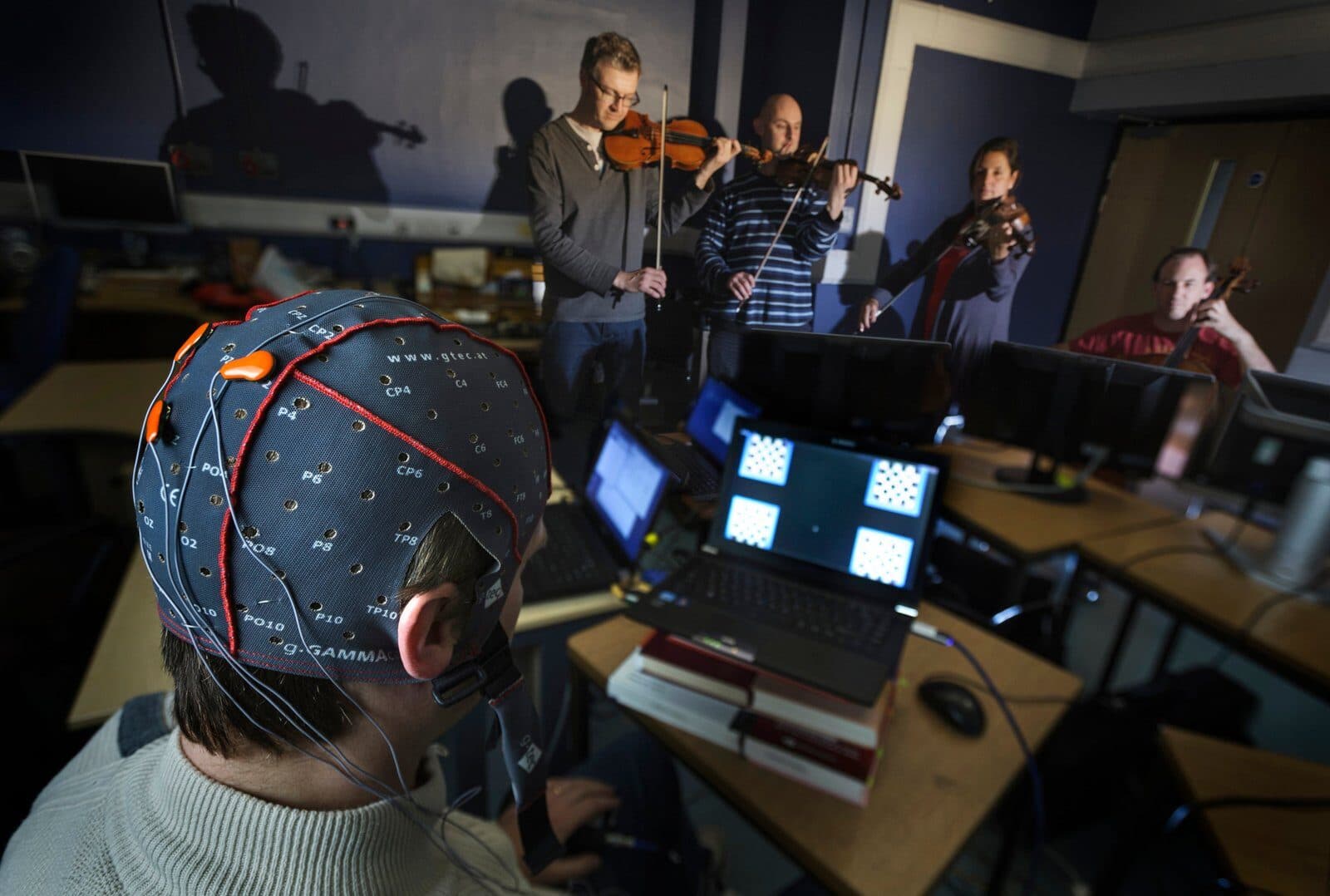
A hyperscanning recording with musicians at the University of Plymouth
What is hyperscanning?

Several brains, one experiment.

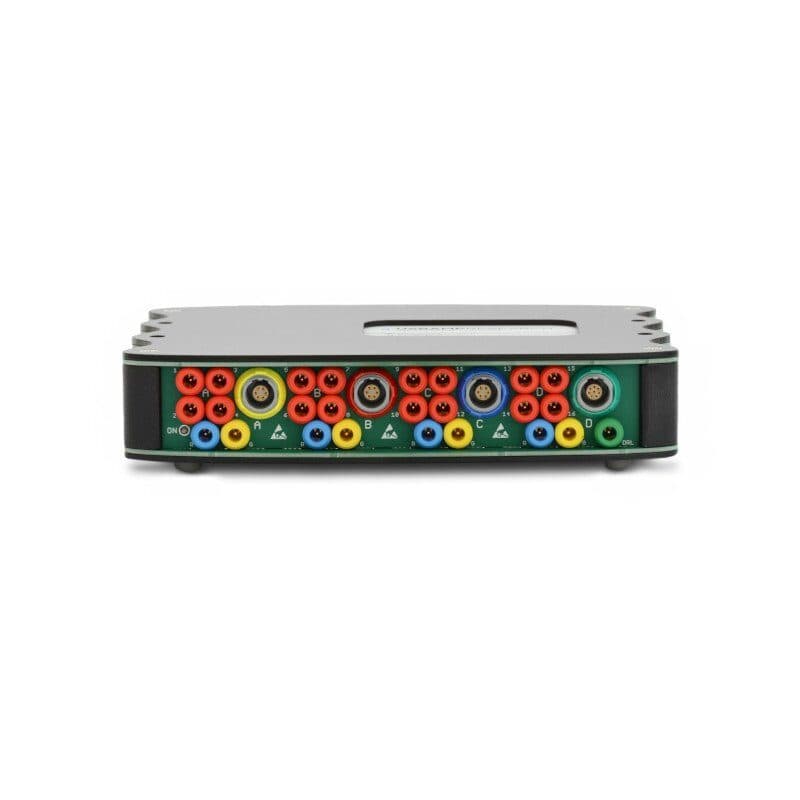
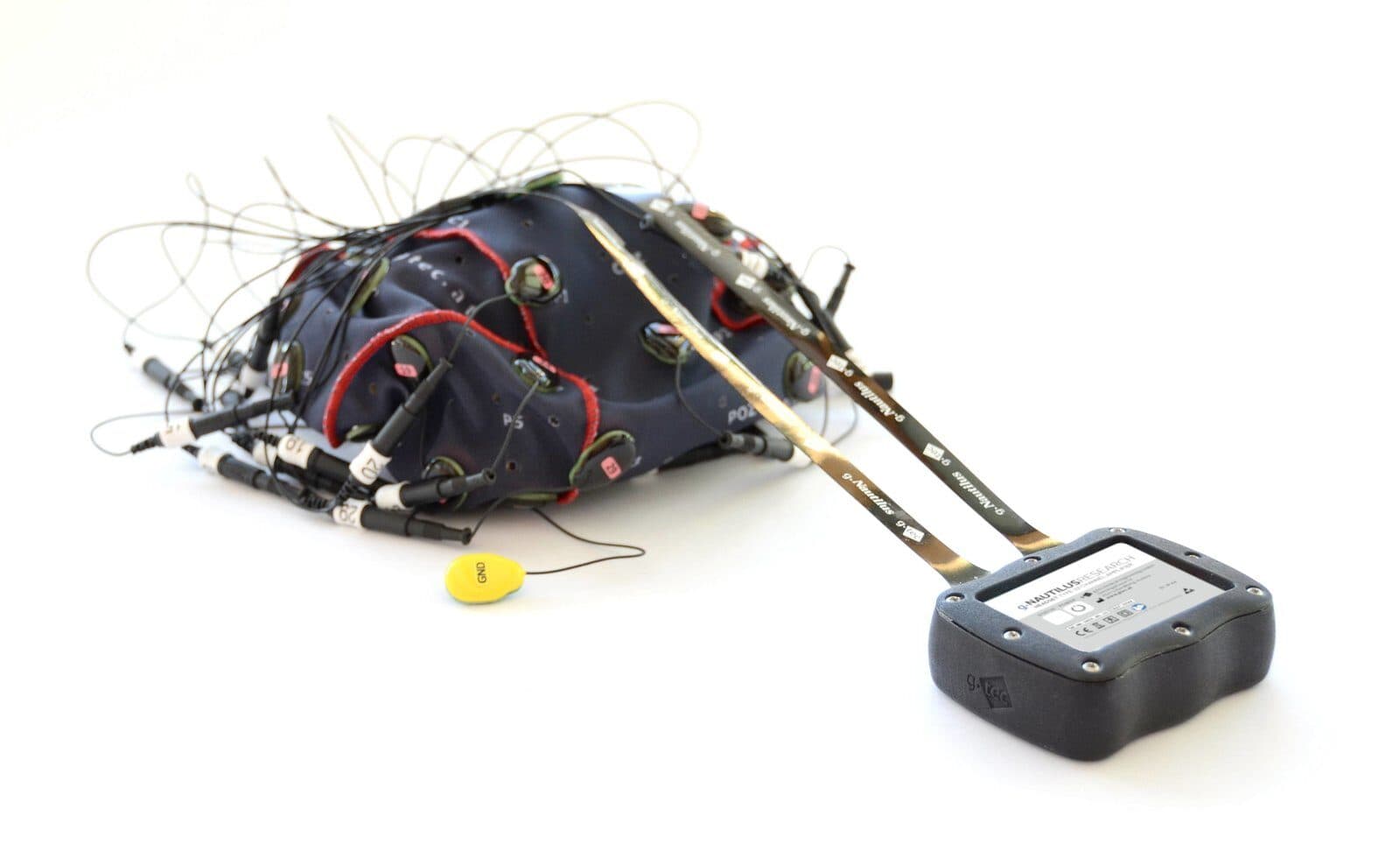
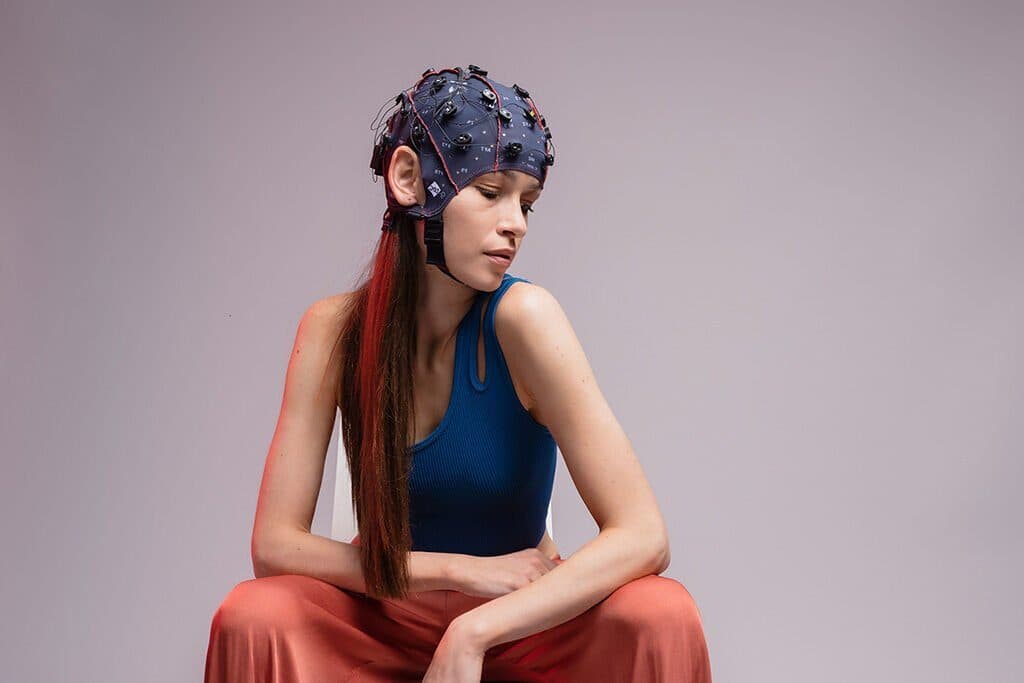
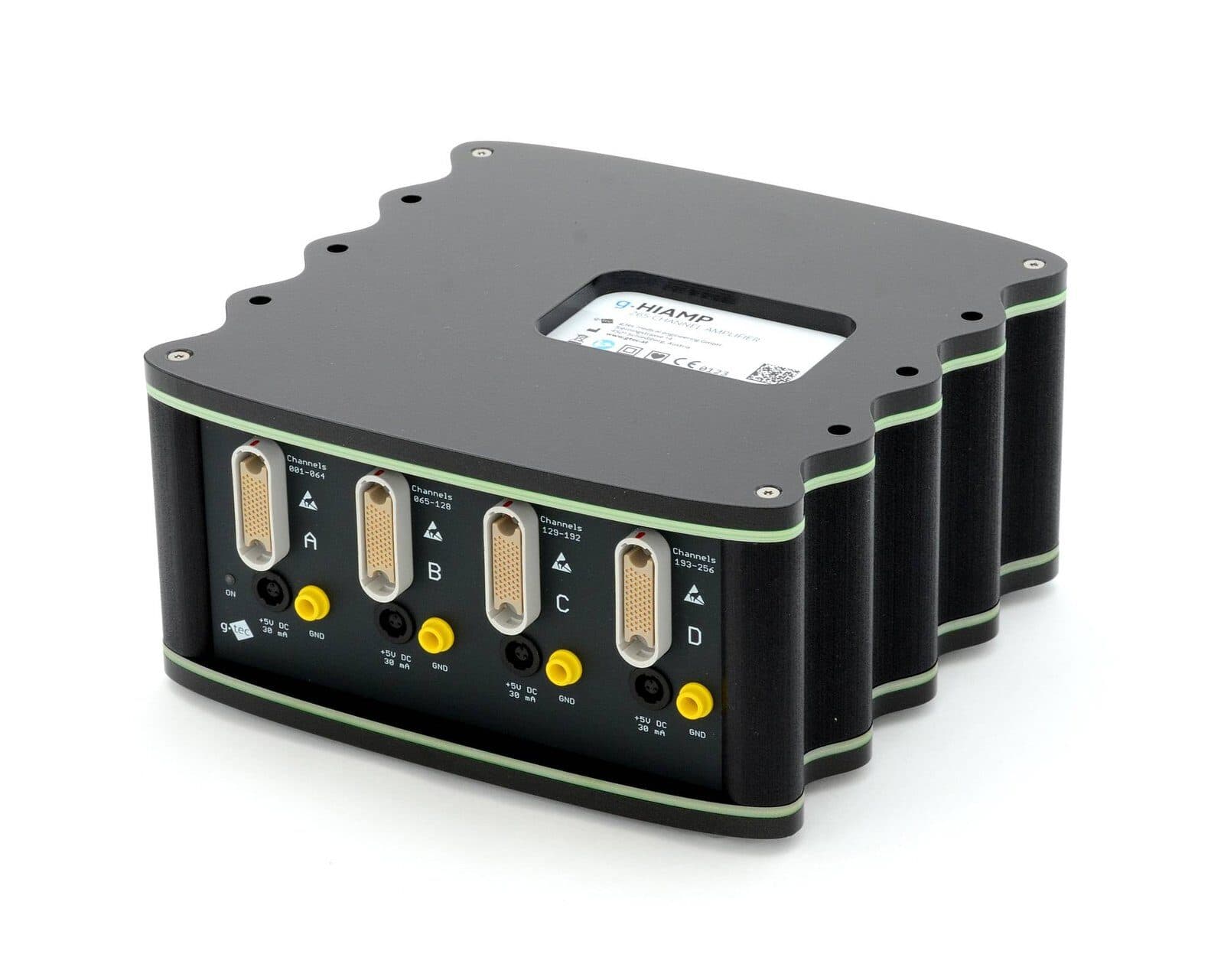
Hyperscanning records EEG from two or more people at the same time, so that neural synchrony between individuals can be studied. With g.tec's multi-device capability, several g.HIamp, g.USBamp or g.Nautilus amplifiers can be connected to a single recording system.

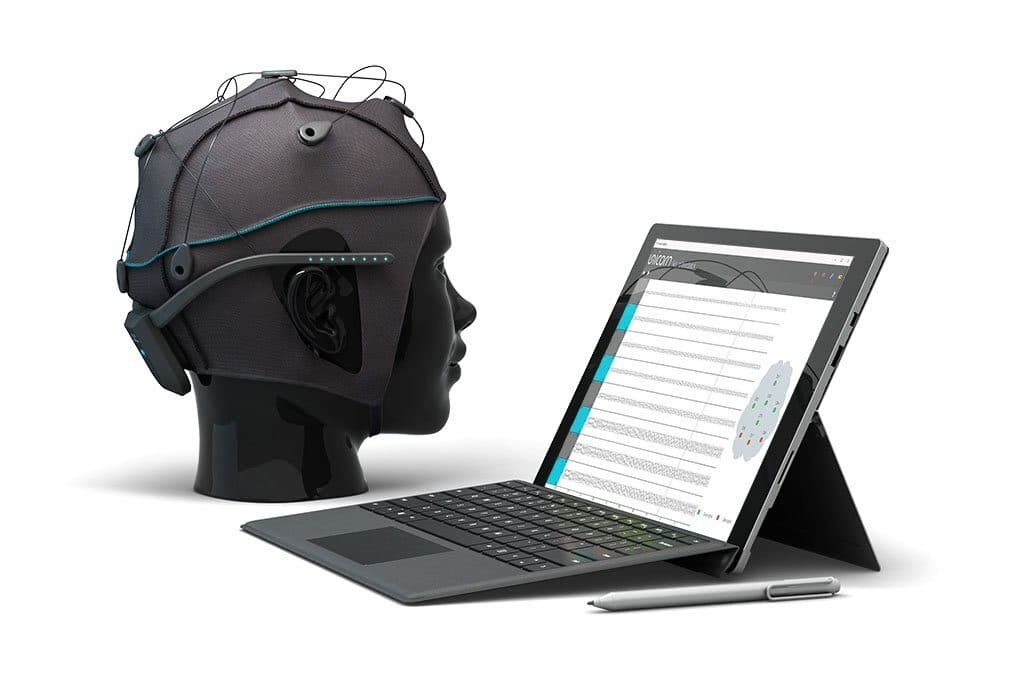
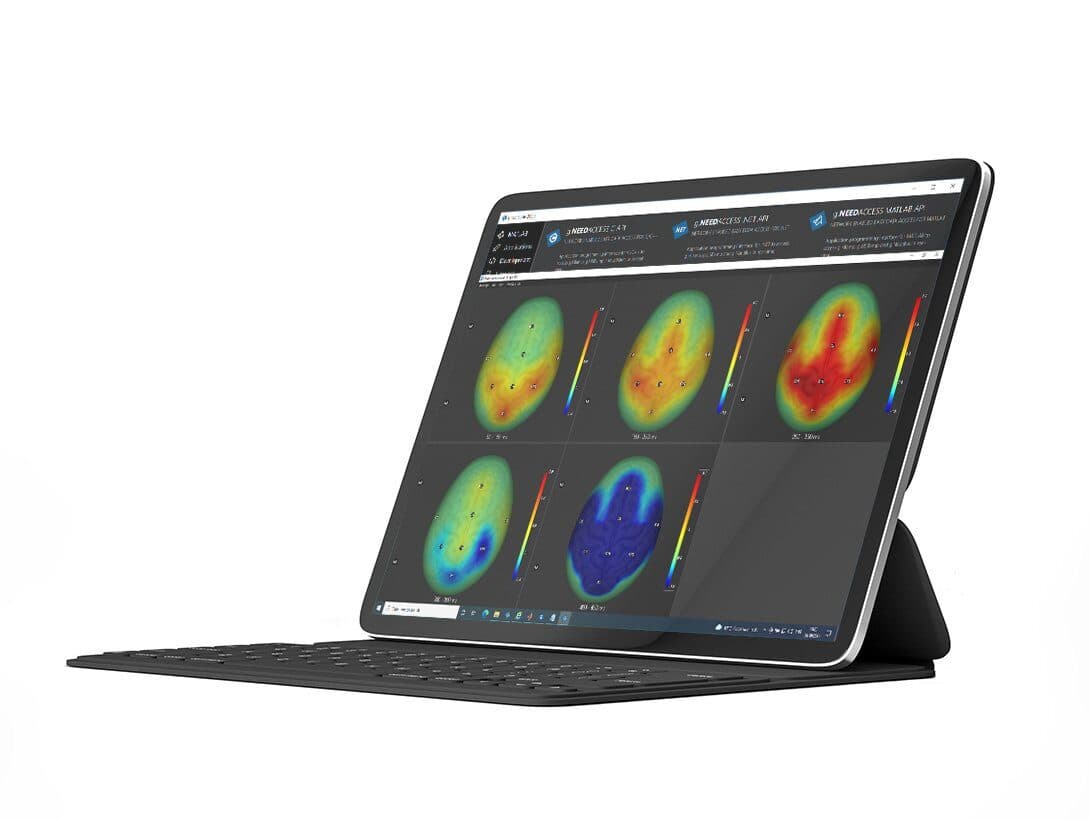
The Hyperscanning toolbox in g.HIsys processes multimodal biosignals such as EEG, EMG, ECG, GSR and respiration from several participants simultaneously. With every participant connected to one central computer, group-level analysis runs in real time.
P300 hyperscanning

Faster communication by joining minds.

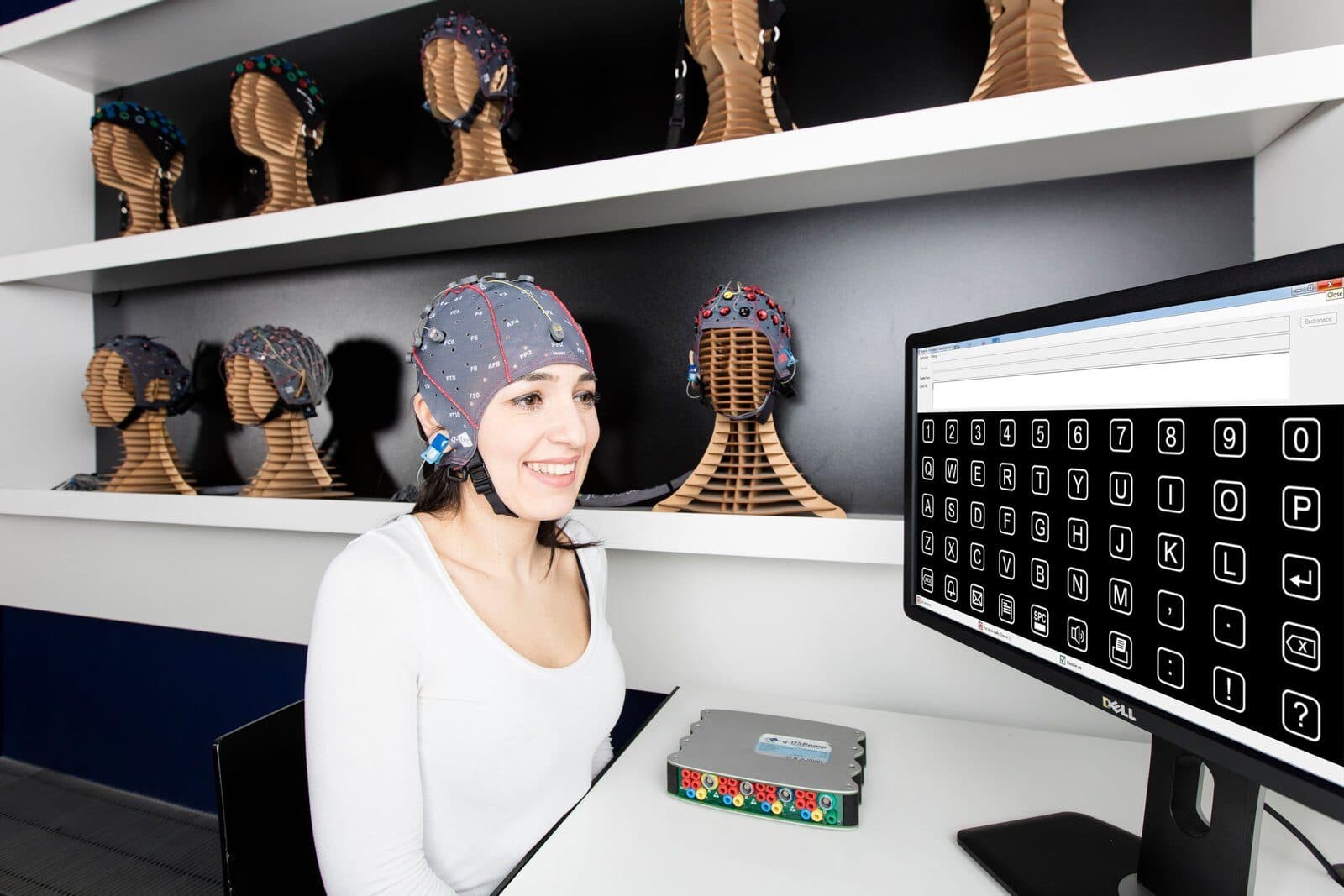
The Hyperscanning demo presented on g.tec's BCI System page shows that multi-person use of the P300 speller markedly increases communication speed and accuracy. When the brain waves of several people are combined, the P300 response to the target character is detected more reliably.

In a study run with a g.tec system at the University of Plymouth's Interdisciplinary Centre for Computer Music Research, the brain synchrony of musicians was examined. People can join their minds to play games, draw, make music, vote or reach shared decisions; hyperscanning reveals the neural basis of that collaboration.

  • Hyperscanning toolbox
Real-life hyperscanning

Brain synchrony in live performance.

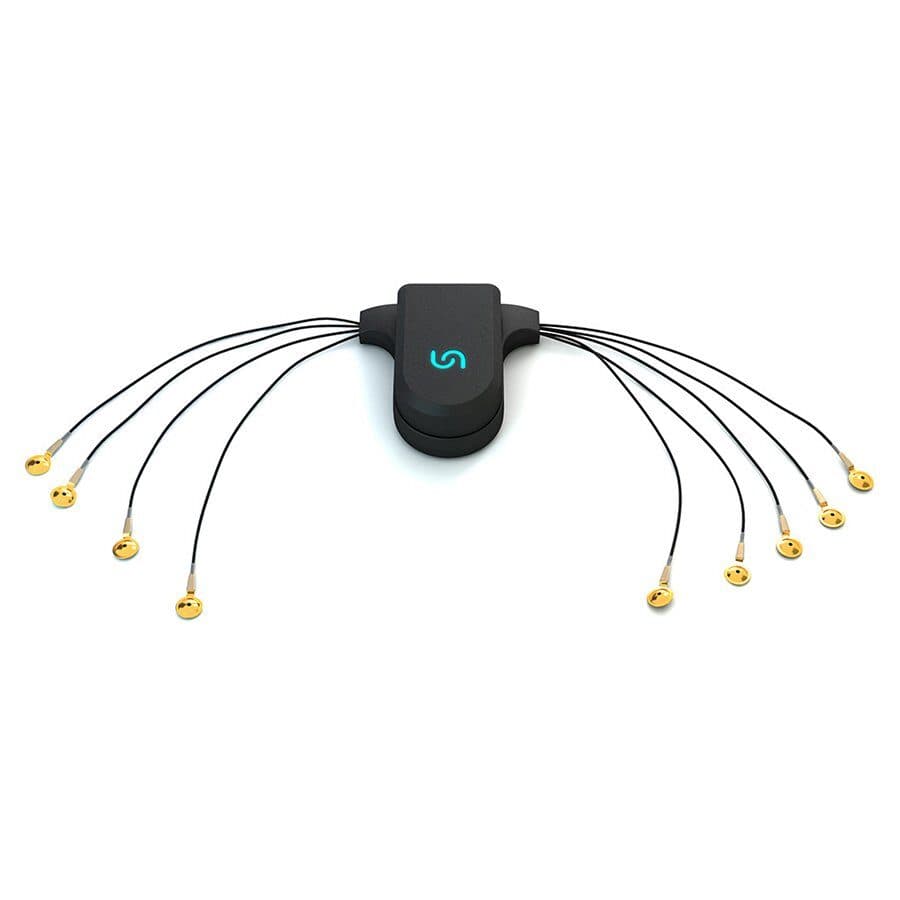
McMaster University's LIVELab has run hyperscanning studies at live concerts with the g.Nautilus wearable EEG system. Musicians and audience members wore EEG devices at the same time while their brain activity was recorded. The work examines the neural basis of the social and emotional impact of musical performance and shows how hyperscanning can be applied in real-life settings.

Processing the group analysis in real time, the central computer let the conductor adapt the performance to the audience's neural responses. Applications like this make it clear that hyperscanning reaches far beyond the basic research lab.

  • g.Nautilus multi-device
Social neuroscience

Research on brain-to-brain synchrony.

Hyperscanning is the most direct way to study how brains synchronise during social interaction between two people. Both participants wear EEG devices at the same time while they talk, solve a shared task or empathise, and inter-brain synchrony is analysed from the recordings.

With g.tec's multi-device capability, hyperscanning can be run at high resolution with 256 channels on g.HIamp or on the move with g.Nautilus. Important findings have been obtained on teacher-student interaction, the parent-child bond and the clinician-patient relationship.

  • Inter-brain synchrony
Set-up topologies

Two ways to build a hyperscanning set-up with g.tec.

g.tec's hyperscanning lecture at Spring School 2020, given by Slobodan Tanackovic, defined two basic set-up topologies.

  1. 01

    One system: every participant on a single recording system

    All participants are connected to the same g.tec recording system. This set-up is used in P300 speller hyperscanning experiments; g.HIsys processes the signals of several people in parallel and reaches far higher accuracy and speed than one person could alone.

  2. 02

    Several systems: one per participant, analysed centrally

    Each participant is connected to their own recording system, and every system sends its data to a central computer. This set-up is used to monitor an audience in real-life settings such as a concert, the theatre or sport; the central computer runs the group analysis in real time.

Applications

Studies you can run with hyperscanning.

Research areas supported by g.tec's Hyperscanning toolbox and multi-device infrastructure.

Systems

The systems we recommend for this field.

Blog

Further reading

EEG and brain–computer interfaces
Contact

Let's build your hyperscanning lab.

Our specialists will help you choose the right combination of devices and software configuration for a multi-participant EEG set-up.

Request a quote

Call us +90 554 381 46 20Serving all of Türkiye · reply within 24 hours on working days