Skip to content
Application field · Recording systems

Multimodal Recording Systems

EEG · Eye tracking · Body sensors

Eye tracking, GSR, ECG, EMG and fNIRS, integrated and synchronised with EEG. Complete physiological data for neuromarketing, consumer behaviour and cognitive load research.

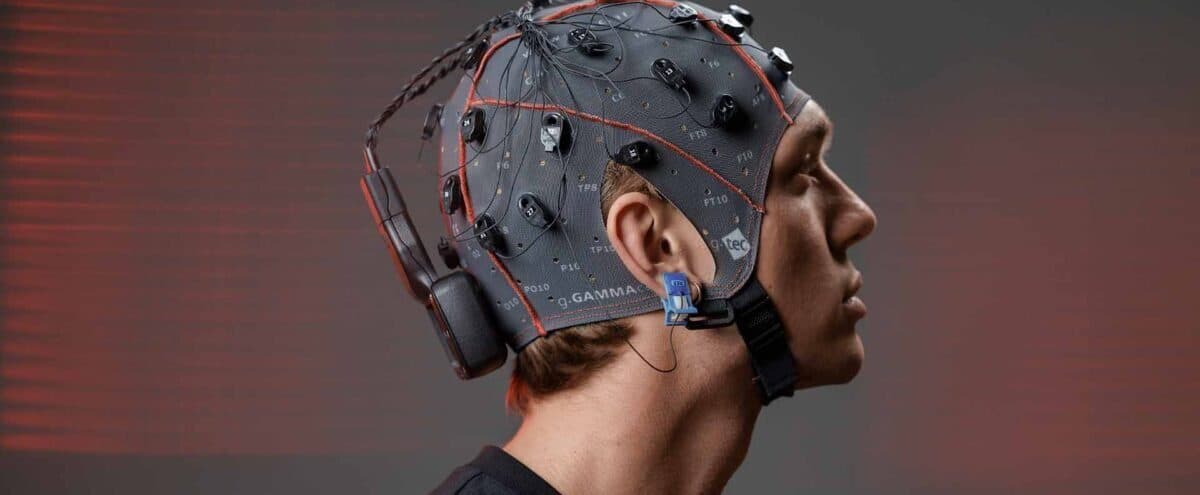
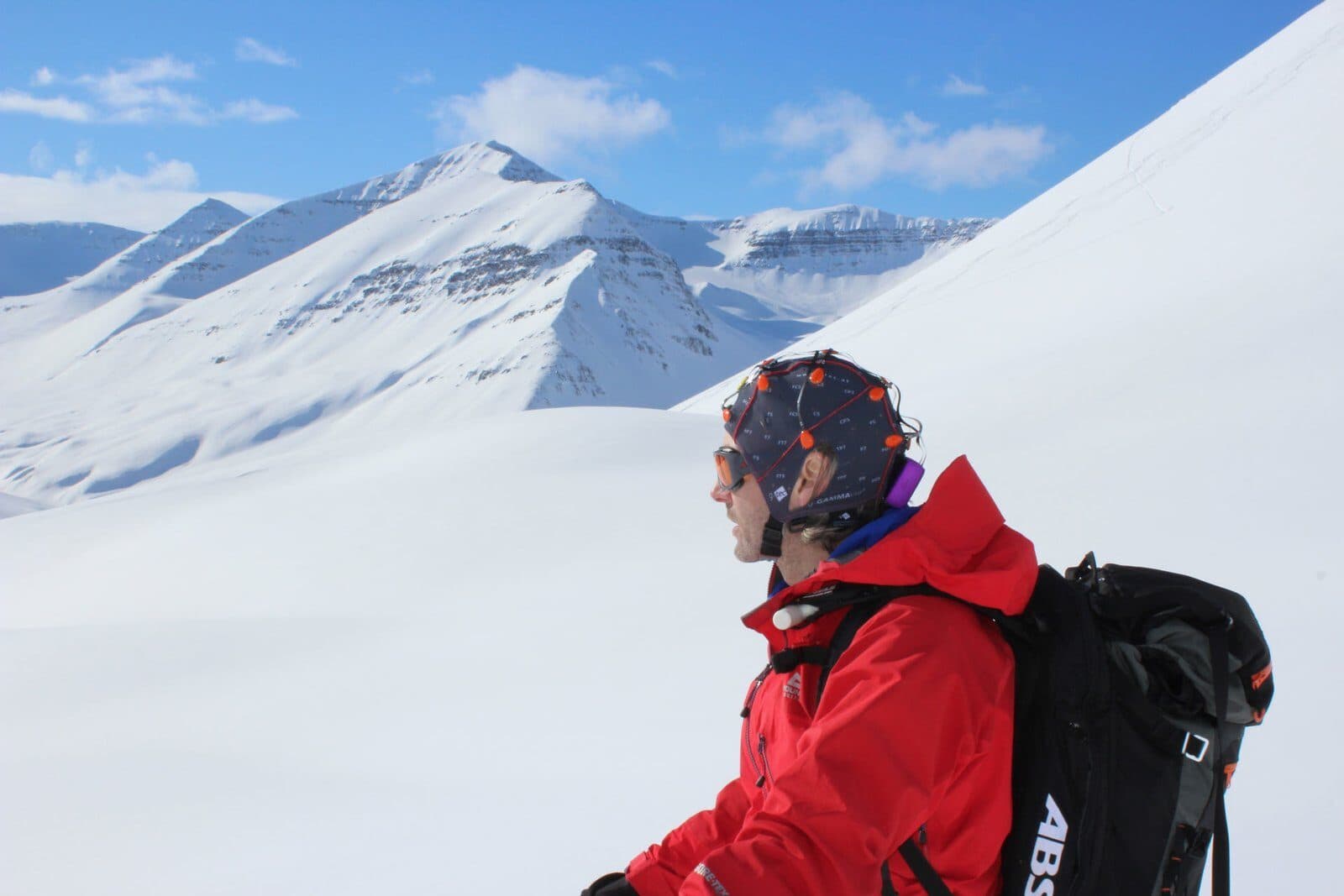
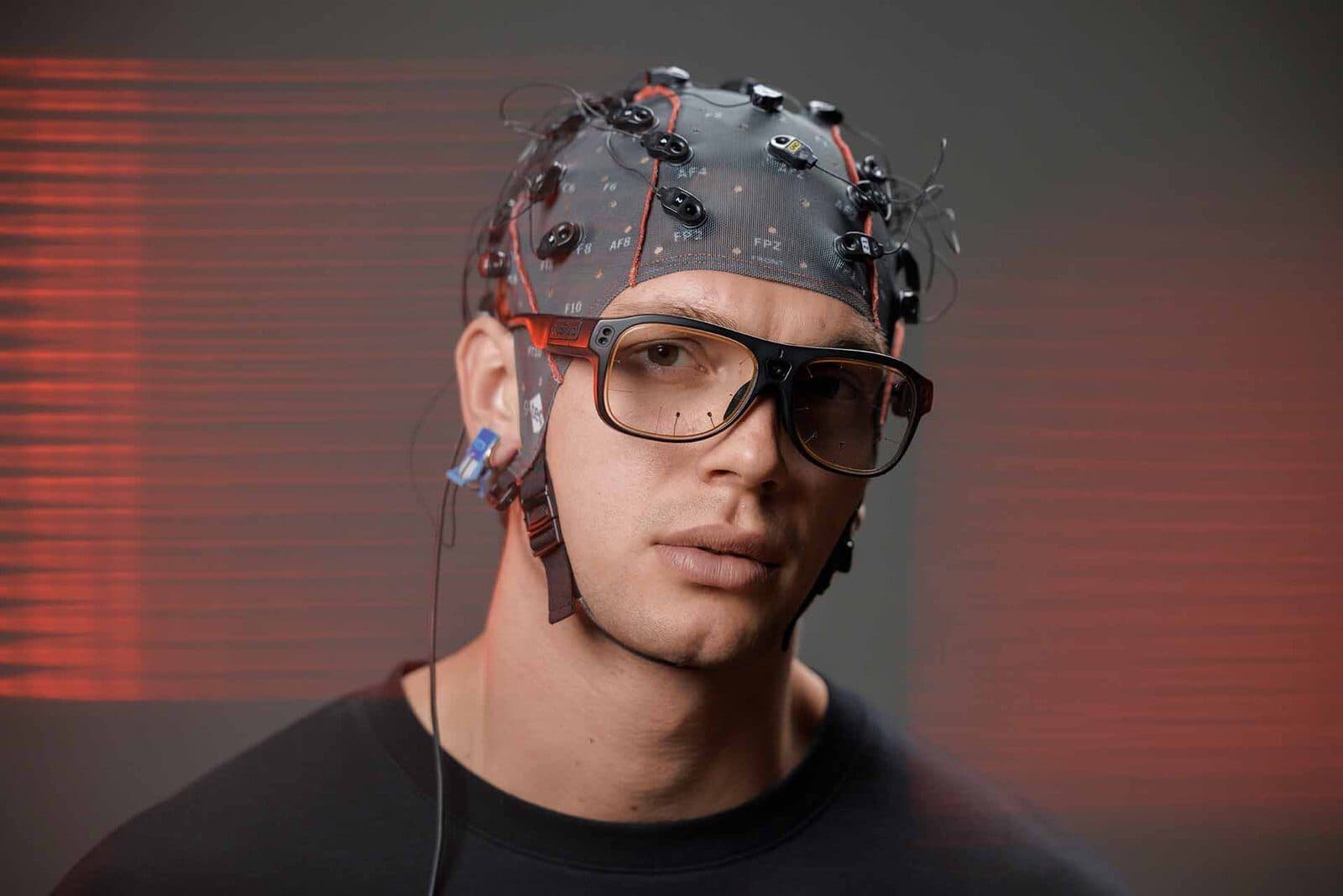
A man wearing a g.Nautilus EEG cap with glasses and an ear sensor
Why multimodal?

A complete physiological profile from one source.

Brain activity alone does not give the full picture of behaviour. g.tec's multimodal recording systems record EEG in sync with eye movement, skin conductance, heart rhythm, muscle activity and oxygen-based brain activity.

g.Nautilus Multi-purpose builds a complete physiological profile with body sensors (ECG, EOG, EMG, GSR, respiration) connected to 4 detachable channels. Because all data share the same timestamp, correlation analyses can be run with millisecond precision.
Neuromarketing and UX

Neuromarketing with EEG and eye tracking.

With g.Nautilus and Tobii Pro Glasses 3 combined, both the point of gaze and EEG are recorded simultaneously while the participant walks between product shelves. Which product draws attention and which advertisement activates the brain are measured with millisecond precision.

In user experience (UX) research it has become the platform of choice for measuring unconscious brain responses to software interfaces, optimising website design and measuring advertising effectiveness. The correlation between dwell time and P300 amplitude reveals the neural basis of consumer decisions.

  • g.Nautilus and Tobii Pro Glasses 3
EEG and fNIRS

Combining temporal and spatial resolution.

EEG records brain activity with millisecond precision, while fNIRS measures changes in oxyhaemoglobin and so reflects regional brain metabolism. Combining the two gives a complete neural profile that neither EEG nor fNIRS can provide alone.

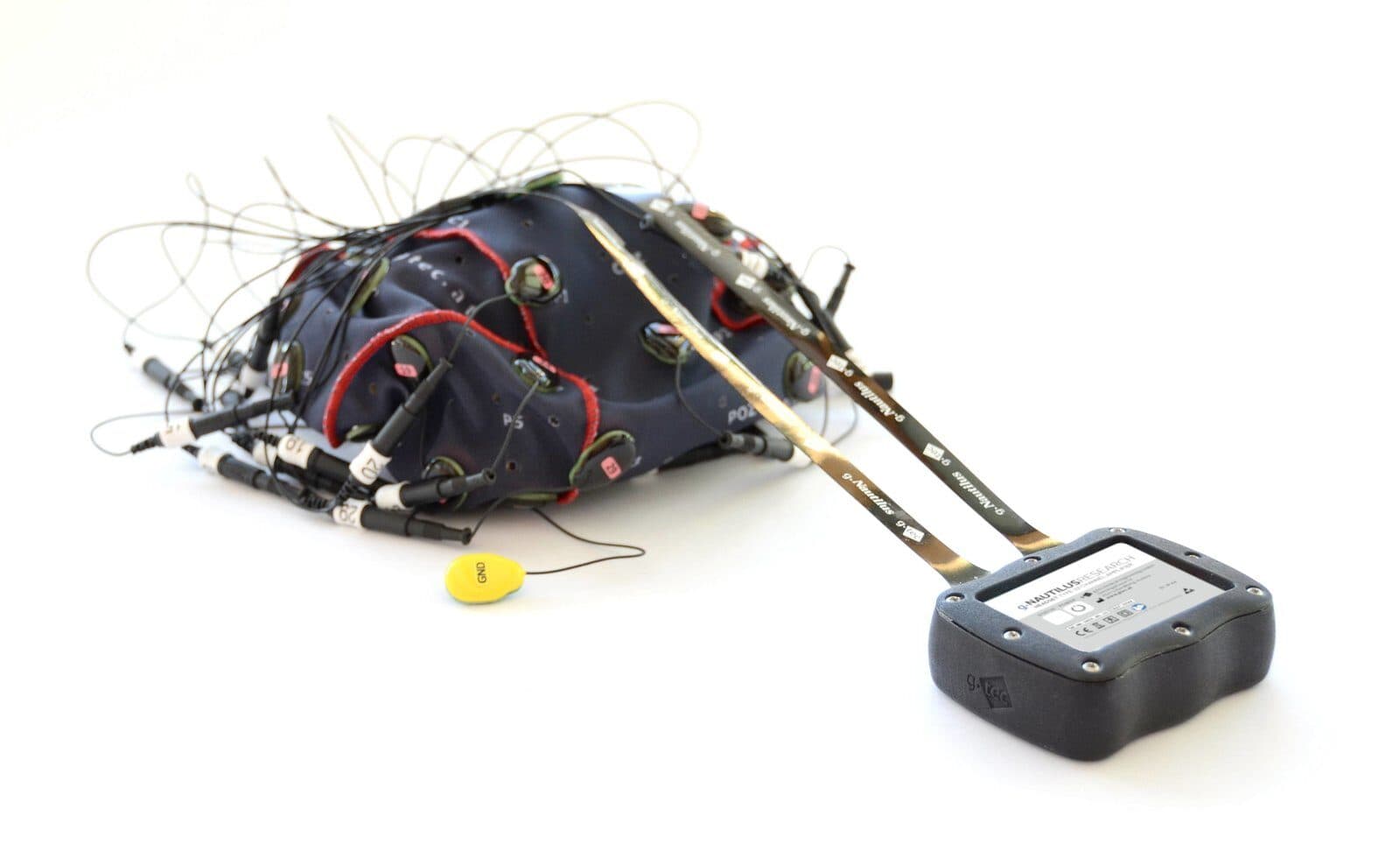
g.Nautilus fNIRS systems record EEG and fNIRS channels simultaneously from the same cap. They are finding growing use in cognitive neuroscience, clinical assessment and neurorehabilitation research.

  • g.Nautilus fNIRS
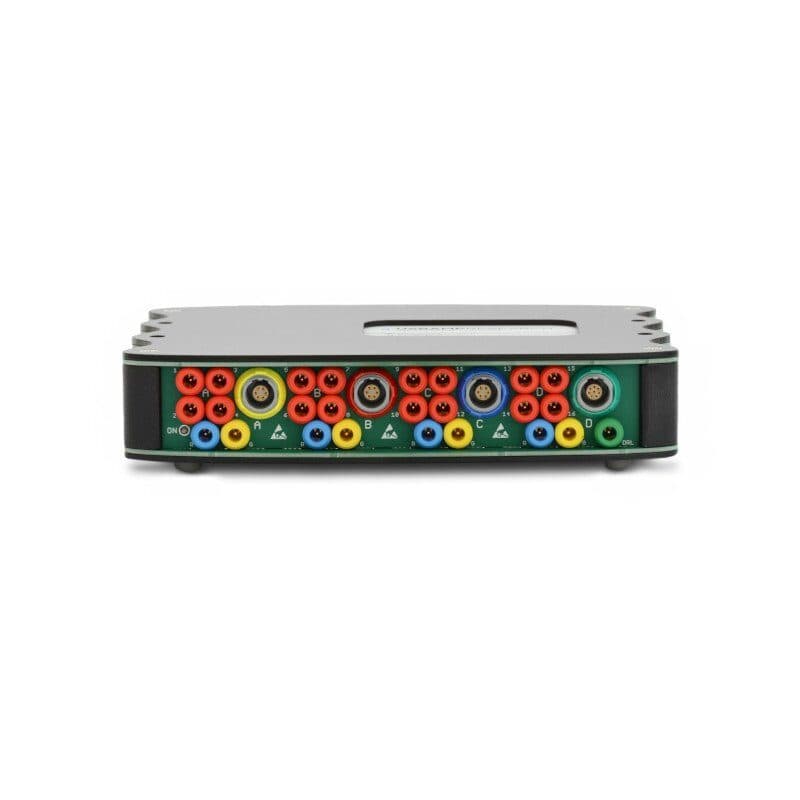
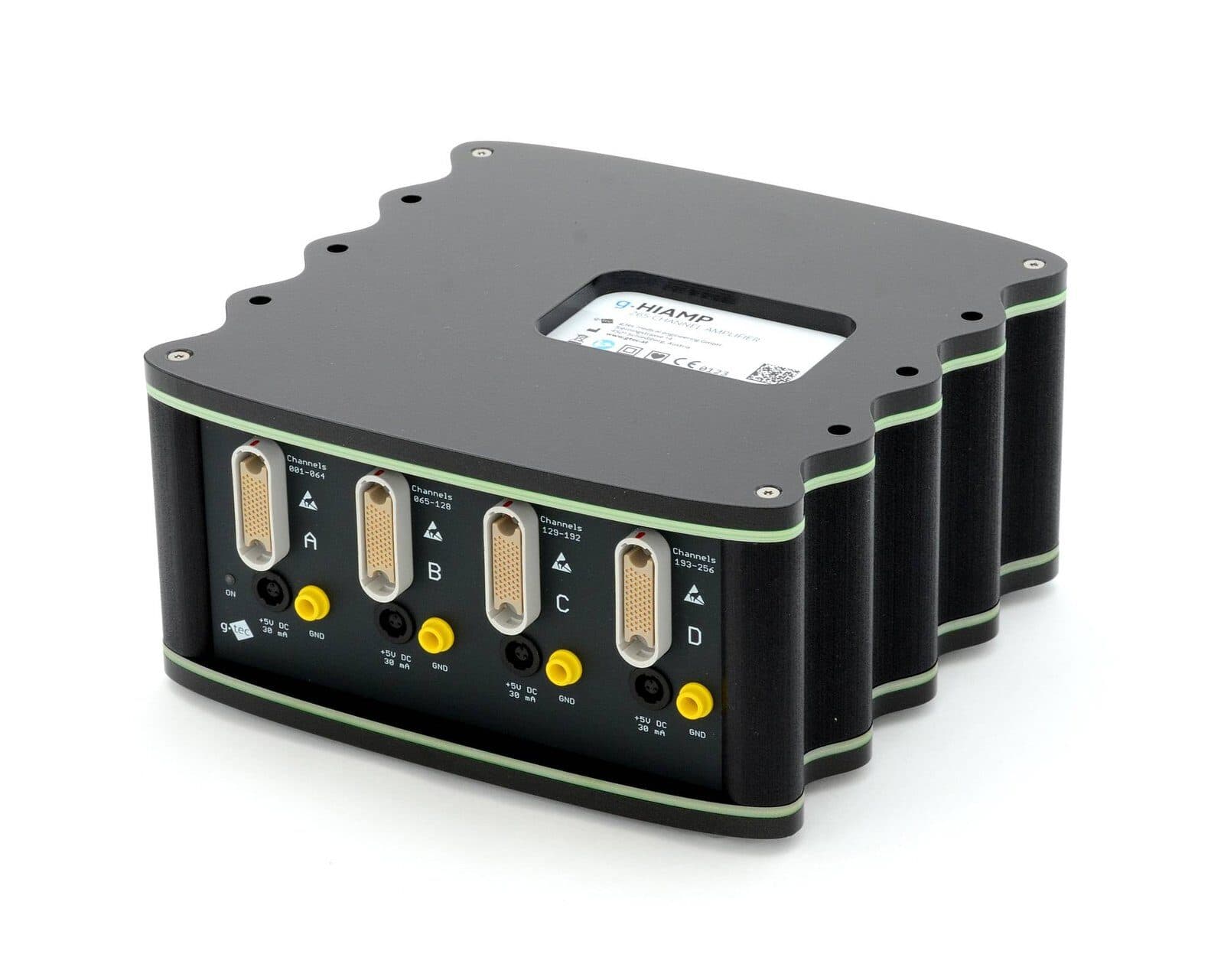
  • g.HIamp
Full physiological profile

EEG, ECG, GSR, EMG and respiration.

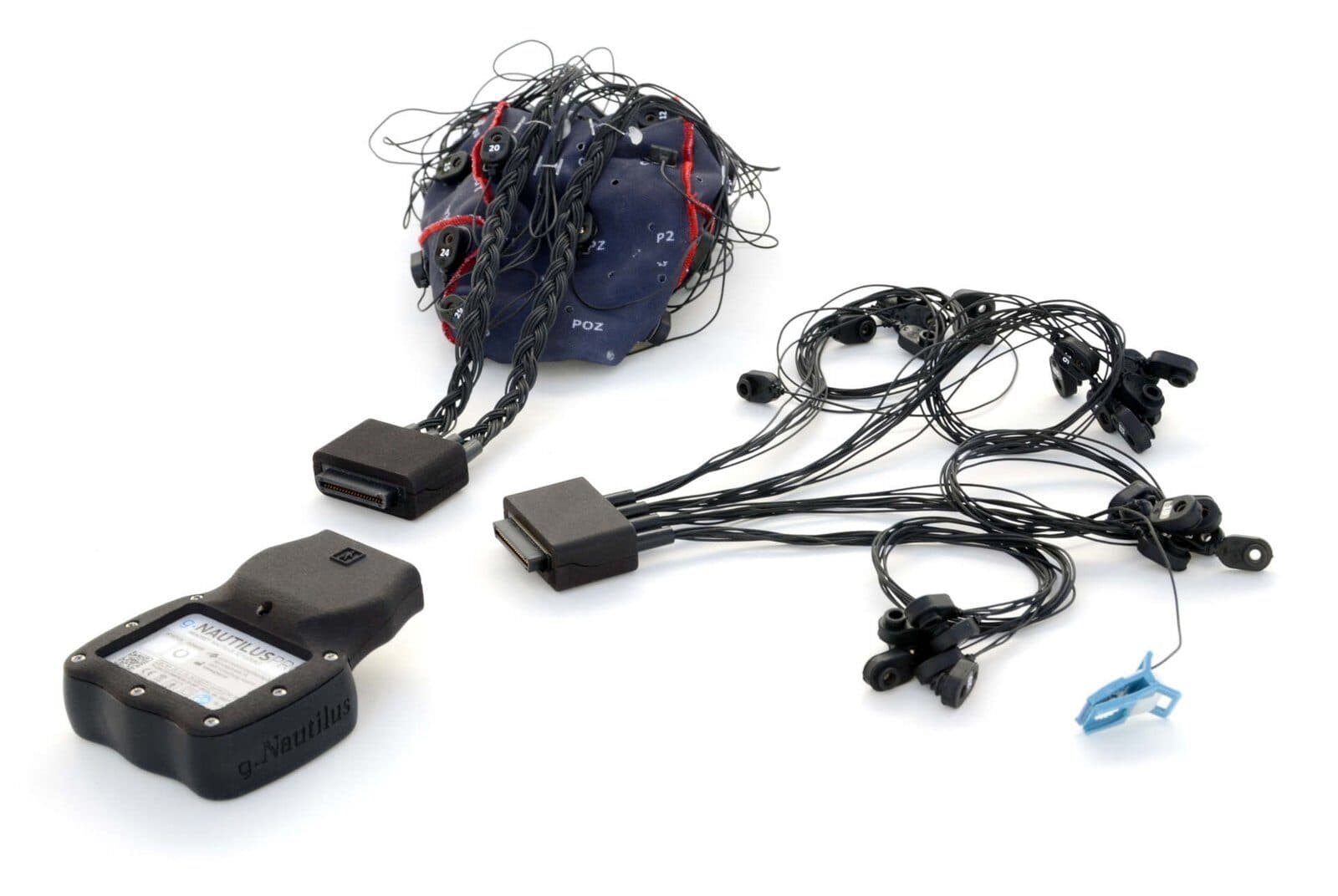
With body sensors connected to 4 detachable channels, g.Nautilus Multi-purpose records ECG, EOG, EMG, skin conductance (GSR) and respiration alongside EEG. All signals share the same timestamp, so correlation analyses can be run with millisecond precision.
The most common uses of this combination are assessing brain activity together with heart rate variability (HRV) and skin conductance in stress research, and measuring muscle activity alongside neural performance markers in sports science.

  • g.Nautilus Multi-purpose
  • Body sensors
Supported combinations

Multimodal recording combinations with g.tec.

Signal combinations supported by the g.Nautilus Multi-purpose and g.HIamp platforms.

  1. 01

    EEG + fNIRS

    Both EEG and functional near-infrared spectroscopy from the same cap. EEG's millisecond temporal resolution meets the oxygen-based spatial information of fNIRS.

  2. 02

    EEG + eye tracking

    g.Nautilus combined with Tobii Pro Glasses 3 measures brain activity in sync with visual attention. The two systems run synchronised and deliver gaze and EEG data in one stream.

  3. 03

    EEG + body sensors

    ECG, GSR (skin conductance), EMG and respiration sensors connect to the 4 detachable channels of g.Nautilus Multi-purpose. A complete physiological profile for research on stress, emotional load and physical performance.

  4. 04

    EEG + EOG

    Electrooculography (EOG) records eye movements and blinks in sync with EEG. The standard combination for artefact removal and eye-movement-based BCI applications.

  5. 05

    EEG + fNIRS + eye tracking

    An advanced platform combining three modalities. Brain activity (EEG), oxygen metabolism (fNIRS) and visual attention (eye tracker) are measured simultaneously.

  6. 06

    EEG + ECG + fNIRS

    Brain activity, heart rhythm and oxygen metabolism monitored simultaneously in high-altitude and exercise research. Ideal for cardio-neuroscience and exercise physiology studies.

Applications

Studies you can run with multimodal recording.

The main research scenarios for g.tec's multimodal systems.

Systems

The systems we recommend for this field.

Blog

Further reading

Recording systems
Contact

Let's build your multimodal recording system.

Our specialists will help you choose the signal combination and device configuration that best fit your research.

Request a quote

Call us +90 554 381 46 20Serving all of Türkiye · reply within 24 hours on working days