EEGEEG & devices
What Matters When Choosing an EEG Device?
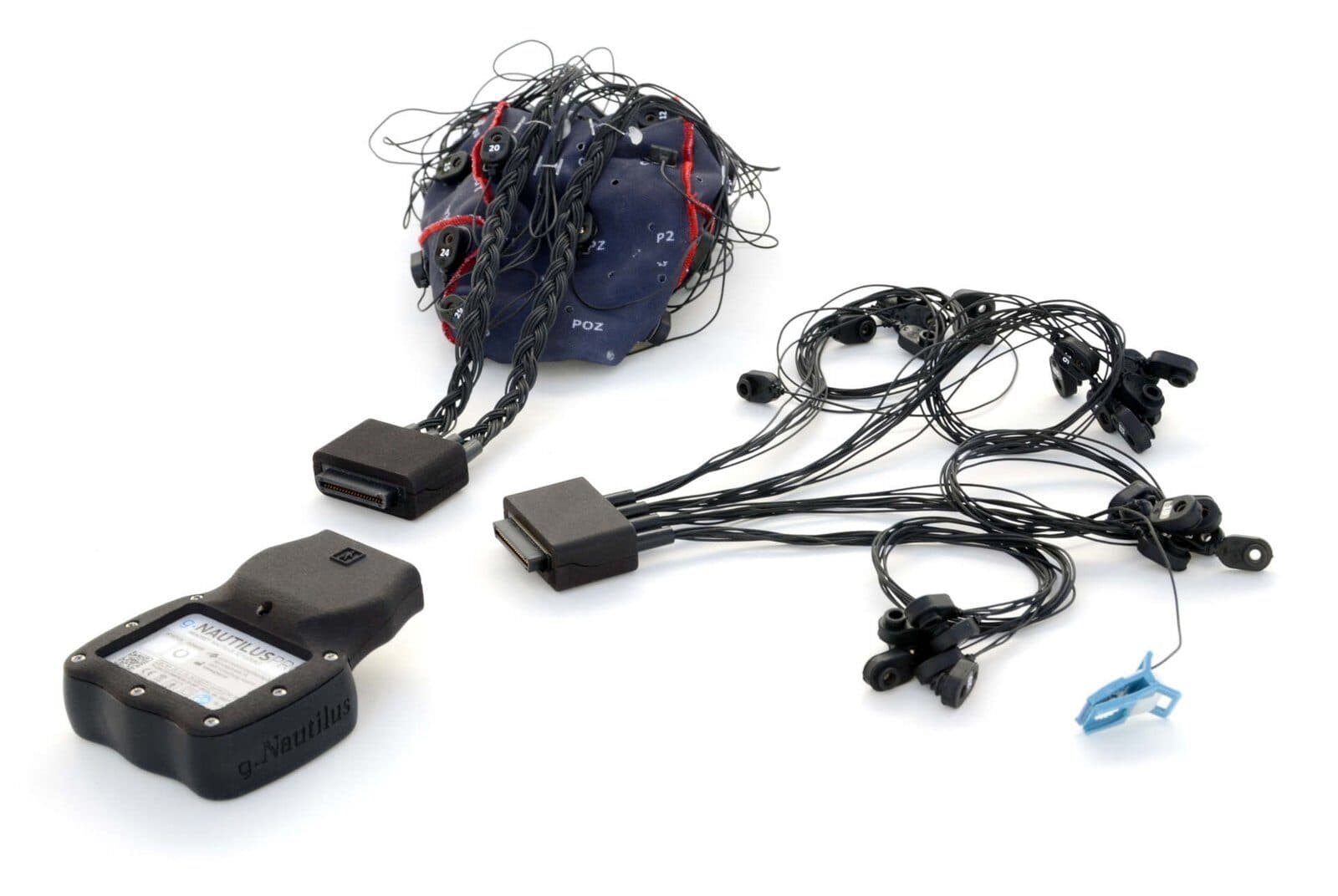
Neurotechnology is advancing fast, and this year’s innovations have made EEG more powerful, more precise and more accessible than ever. At the centre of these developments is the FDA-cleared, CE-marked g.Nautilus PRO Flexible, which g.tec presents as the best EEG device of 2026.
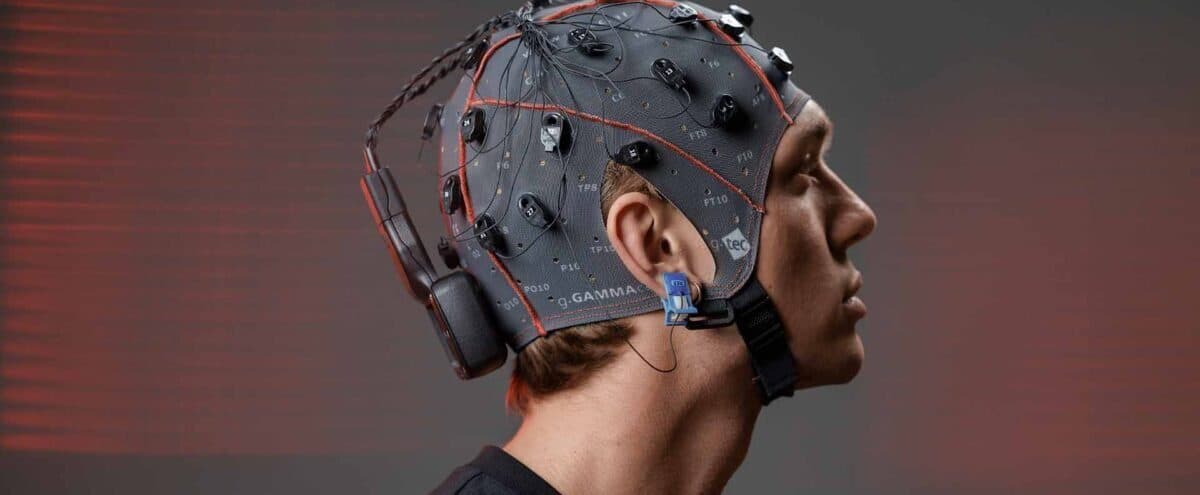
The Rise of Wearable EEG in Clinical Practice
EEG technology has undergone a fundamental shift, from bulky systems usable only in the lab to lightweight, patient-friendly wearable devices that make real-time brain monitoring possible in natural settings. Clinicians can now record high-quality EEG while patients are:
- Sitting upright or lying naturally
- Moving slightly during an examination
- Performing rehabilitation tasks
- Engaging with emotional, cognitive or sensory stimuli
This shift makes EEG systems that preserve signal integrity during movement a necessity — and that is exactly where the g.Nautilus PRO Flexible stands out.
Why Is Signal Quality Critical?
High-quality EEG signals are essential because any form of noise — movement artefacts, cable motion, electrode shift or environmental interference — can mask or distort the brain activity that clinicians and researchers need to analyse. When signal quality drops:
- Event-related potentials (ERPs) can be masked
- Frequency bands linked to cognition or pathology can be distorted
- The accuracy of automated classifiers can fall
- Neurofeedback or BCI performance can suffer
- The risk of misinterpretation in clinical assessments rises
g.Nautilus PRO Flexible — g.tec’s Best EEG Device of 2026
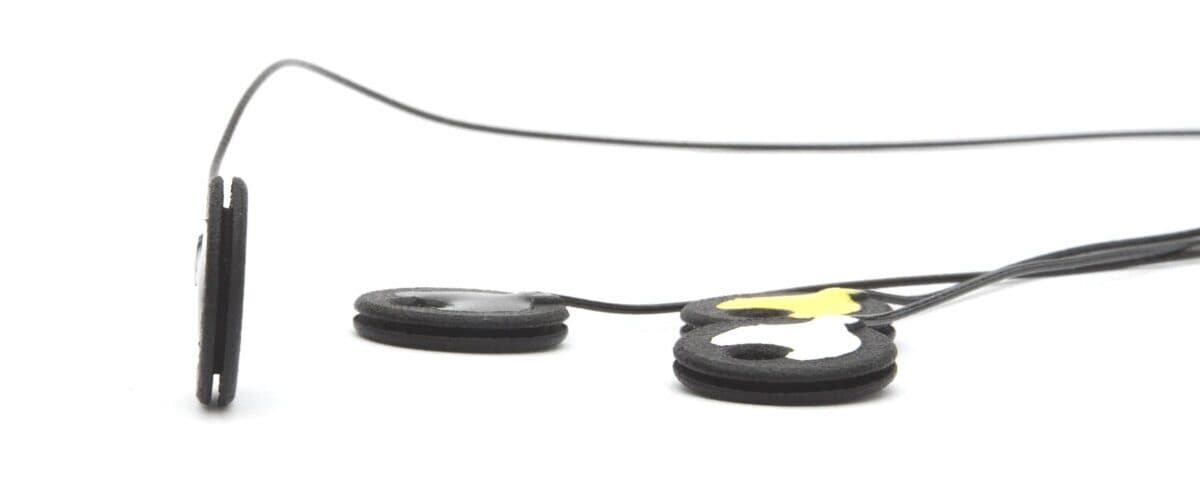
The g.Nautilus PRO Flexible is an FDA-cleared, CE-marked, medical-grade wearable EEG system. It supports 8, 16, 19 or 32 EEG channels and comes with modular headbands fitted with g.SAHARA hybrid electrodes (dry or gel) or g.SCARABEO wet electrodes.
Key Technical Specifications
- 24-bit precision, 500 Hz
- 2.4 GHz wireless (10 m range)
- Up to 10 hours of continuous recording
- Qi inductive charging
- Built-in 3-axis accelerometer
- < 0.6 µV RMS noise
Real-World Applications
Clinical EEG and Neurodiagnostics
- Assessment of disorders of consciousness
- Monitoring of ALS and neurological disease
- ADHD and cognitive assessments
tDCS and TMS Compatibility
With the g.BSanalyze software, the system removes stimulation artefacts within milliseconds.
Industrial Neuroscience
Dolby Laboratories uses the g.Nautilus PRO Flexible to measure audience engagement in real time.
Rehabilitation and Movement Studies
- Stroke rehabilitation
- Motor imagery therapy
- Gait and balance studies
A Complete Software Ecosystem, Including OSCAR Artefact Removal
The g.Nautilus PRO Flexible integrates seamlessly with g.tec’s advanced software environment:
- g.Recorder
- Secure, high-precision recording
- g.BSanalyze
- Comprehensive offline processing
- OSCAR artefact removal
- Automatically detects and suppresses artefacts such as muscle activity, blinks, cable noise and slight movements. It improves data reliability, particularly in patient populations that involve movement.
- BCI frameworks
- Neurofeedback, communication systems and rehabilitation interfaces
Competitor Comparison
| Feature | g.Nautilus PRO Flexible | Typical 2026 competitor |
|---|---|---|
| Channel count | 8–32, modular | 8–16, fixed |
| Electrode type | g.SAHARA hybrid / g.SCARABEO wet | Usually dry only |
| Artefact removal | OSCAR + TMS/tDCS removal | Basic filters |
| Certification | FDA-cleared, CE-marked | None or limited |
| Set-up time | Very fast | Moderate |