fNIRSBCI / neurofeedback
Real-Time Brain Imaging for Thought Control and Neurofeedback
A new deep-learning-powered processing platform cleans wearable HD-DOT data in real time and turns it into 3D brain activity, opening the way for brain–computer interfaces.
Brain–computer interfaces (BCI) and neurofeedback require brain activity to be read instantly. This study presents a processing platform that brings wearable optical brain imaging into this “real-time” world.
Why fNIRS/DOT?
BCI and neurofeedback are used more and more in rehabilitation, assistive technologies, neurological diseases and behavioural disorders. fNIRS and DOT are promising for these applications: they are non-invasive, portable and low-cost, with relatively high spatial resolution.
The real challenge: real time
Processing fNIRS/DOT data instantly is not easy. Three things have to be done at once: establishing the measurement’s baseline, correcting motion artefacts (MA) simultaneously across all channels, and (in DOT) speeding up the time-consuming 3D image reconstruction.
The solution
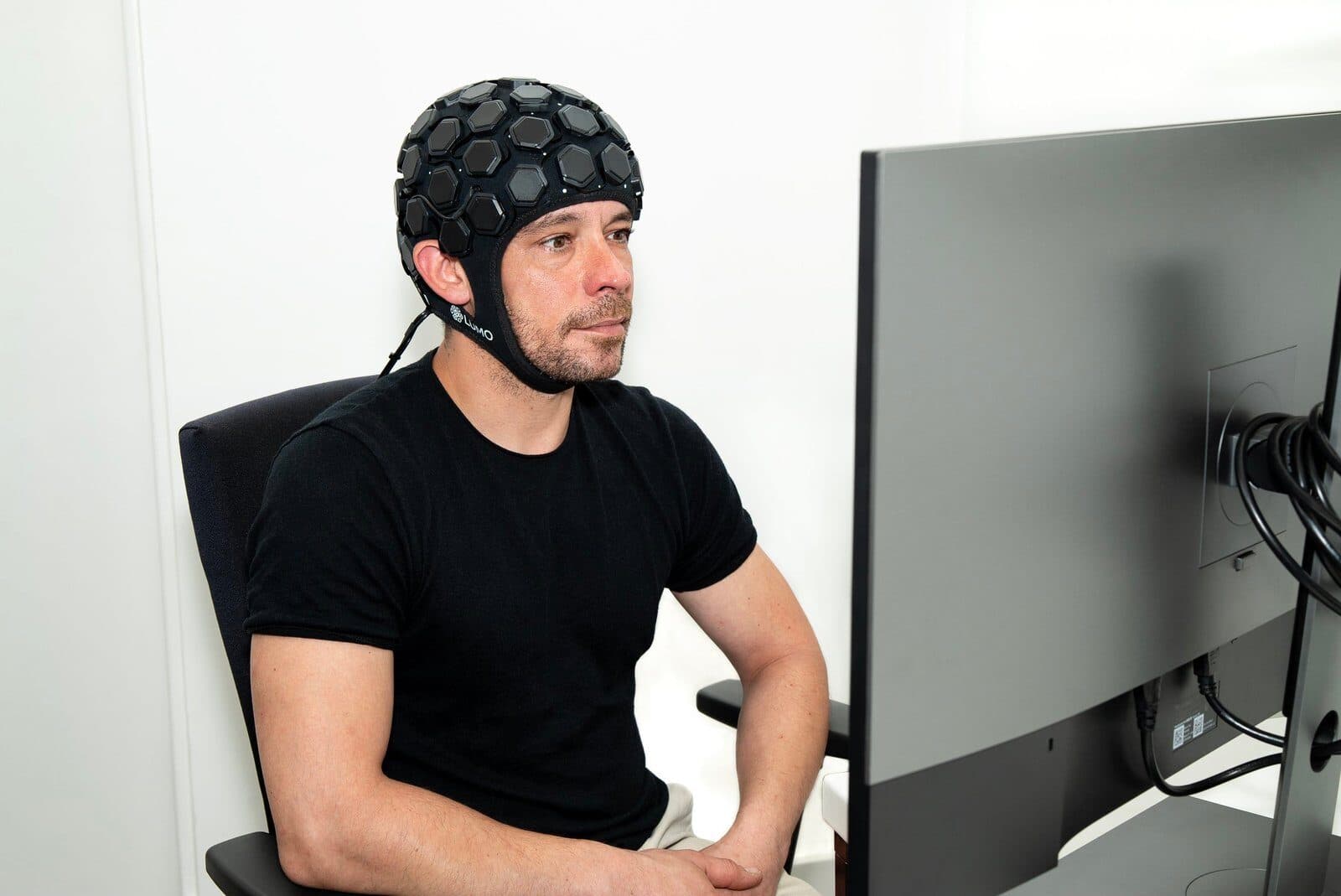
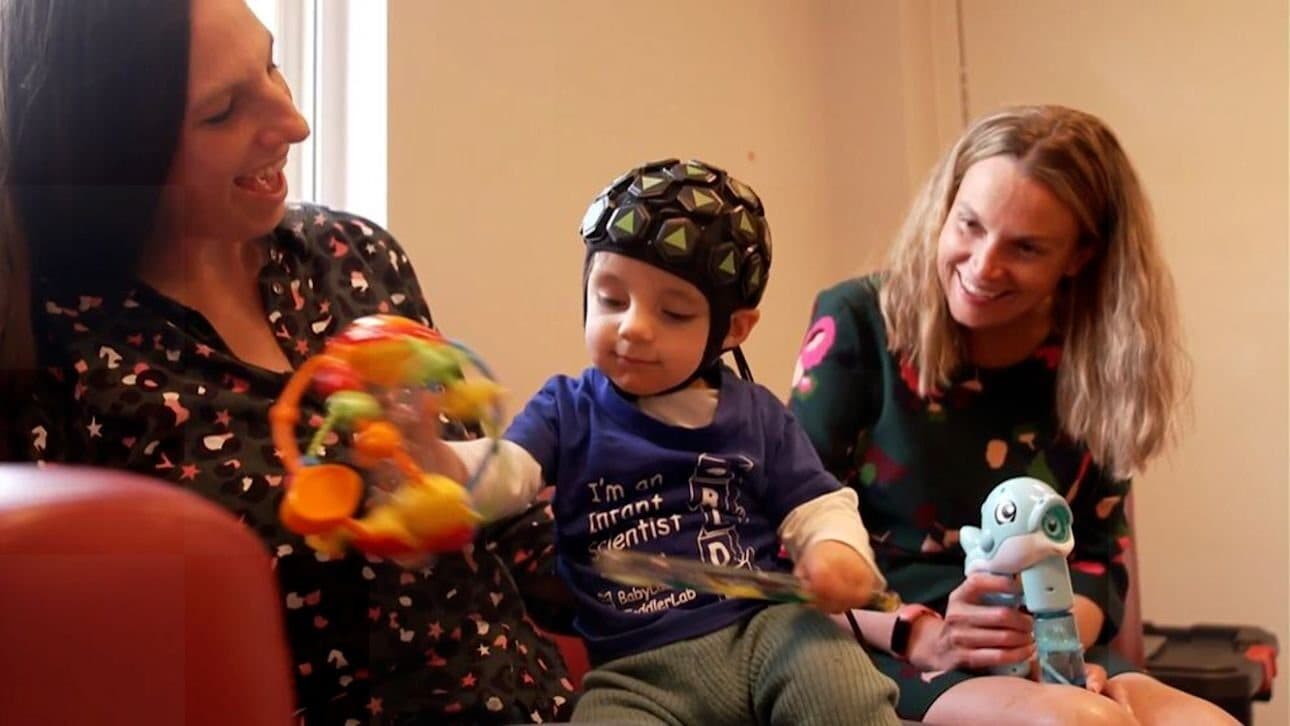
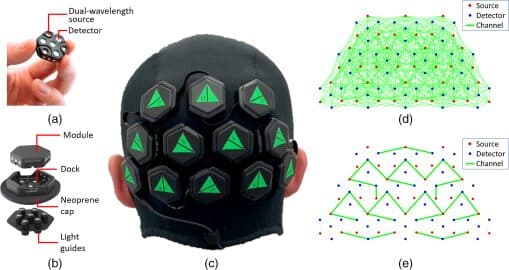
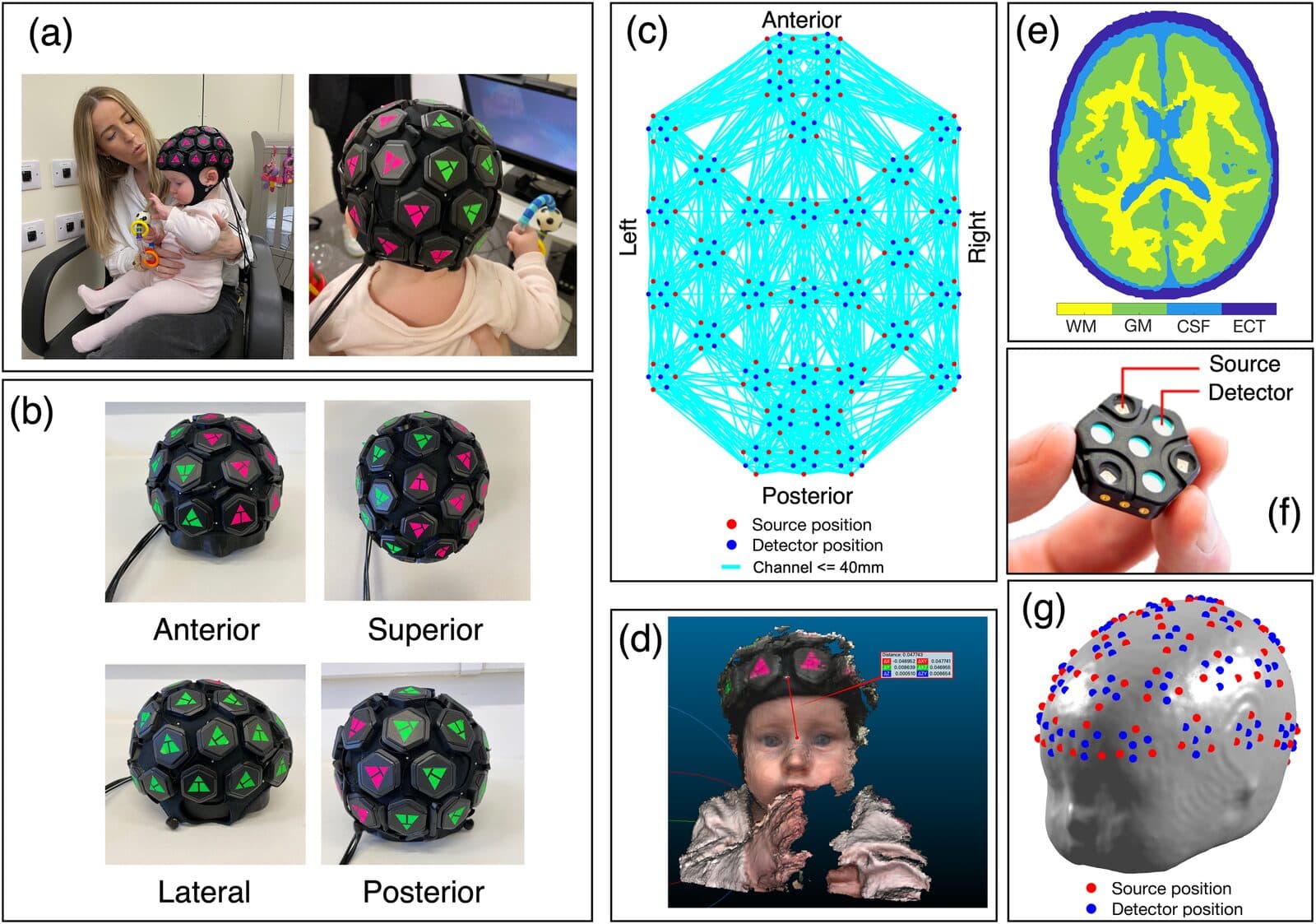
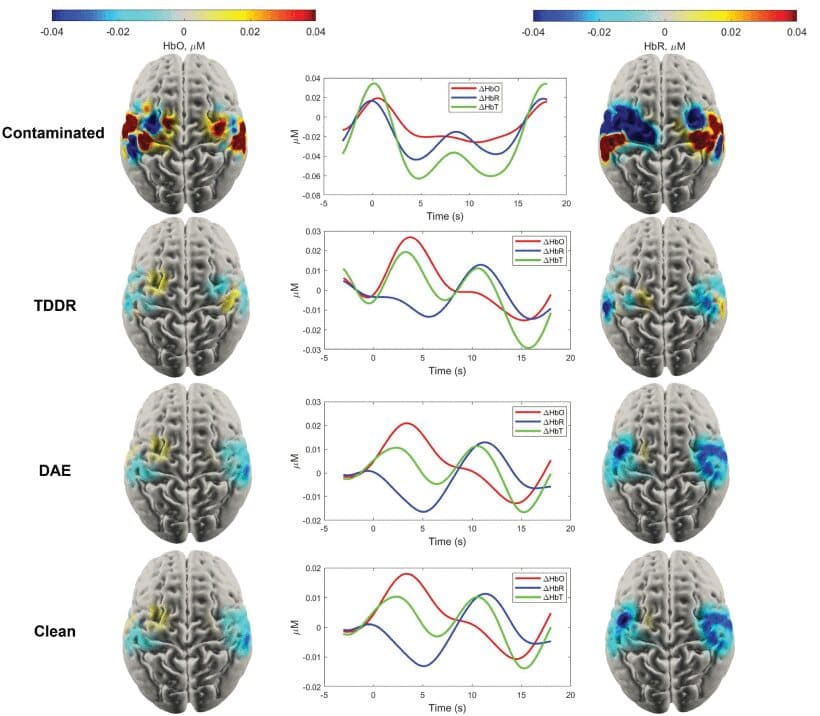
The proposed system combines three components: baseline calibration; a motion-artefact correction model based on a denoising autoencoder (DAE) with a sliding-window strategy; and streamlined reconstruction of 3D brain haemodynamics using a precomputed inverse Jacobian matrix. The data were collected with Gowerlabs LUMO (wearable HD-DOT), and the system was compared with established MA correction methods (MARA, tPCA, wavelet, splineSG, TDDR).
Why does it matter?
This platform makes fNIRS/DOT practical for real-time BCI and neurofeedback. In other words, it opens a concrete door to thought control, rehabilitation with instant brain feedback, and assistive technology applications.