fNIRSInclusion / development
Brain Imaging for Every Child: Including Neurodivergent Children in Research
Wearable brain imaging holds promise for early markers, yet young neurodivergent children are left out of most studies by barriers to taking part. This study looks for a way to change that.
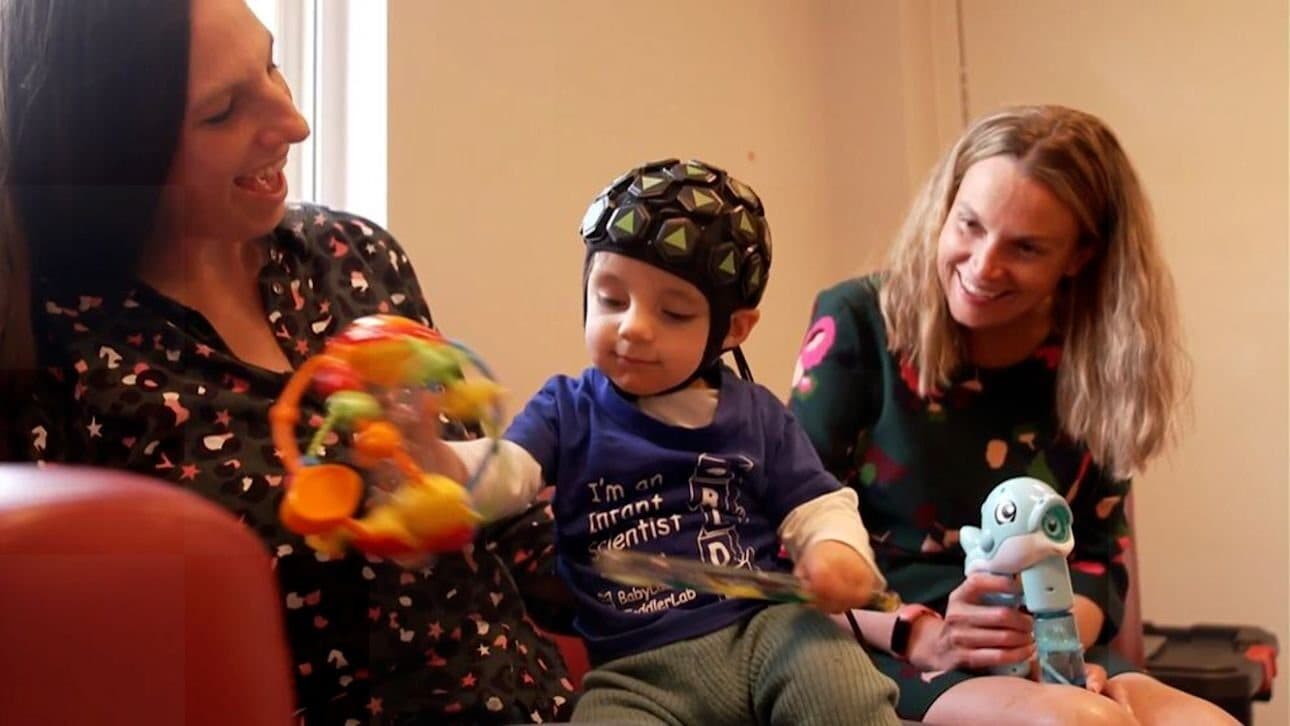
Wearable brain imaging opens an exciting door to understanding children’s development early on. But that door is not equally open to everyone: some of the very children who could benefit most — young neurodivergent children — cannot take part in most studies because of barriers in the equipment and the setting. This study looks for a concrete way to open that door to all.
First, a few concepts
Let us simplify two terms that may seem complex:
- fNIRS / DOT
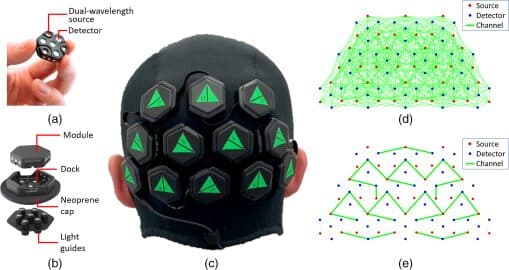
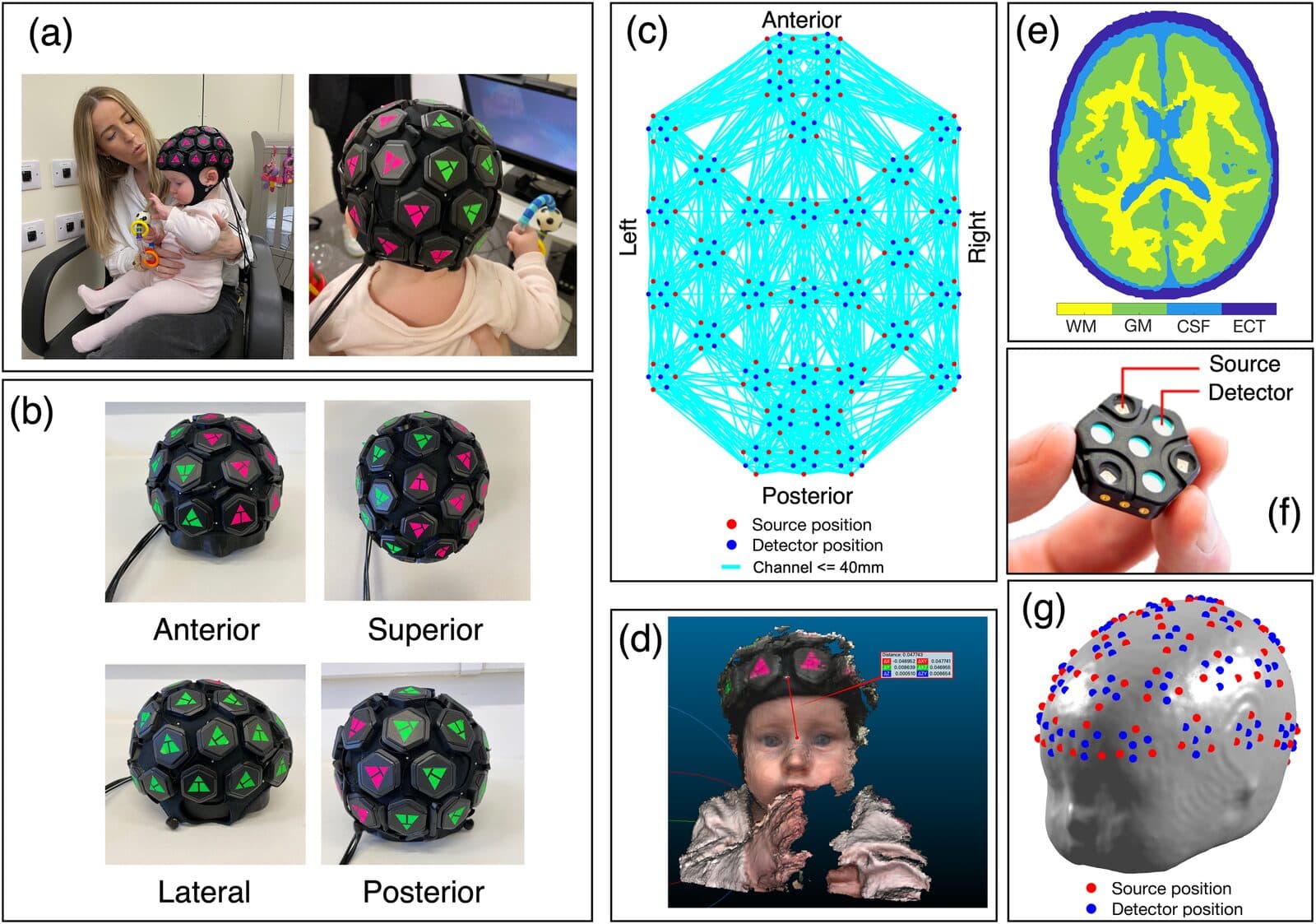
- Small optodes placed on the scalp measure blood oxygenation in the cortex with harmless infrared light. Unlike MRI, it does not require keeping still; the child can sit and play. DOT is a denser, three-dimensional form of this measurement.
- Neurodivergent
- People whose brains work differently from those of the majority of society (neurotypical) — as in autism and ADHD (attention deficit hyperactivity disorder). This is not a deficit but a different way of functioning.
The problem: a “one size fits all” approach
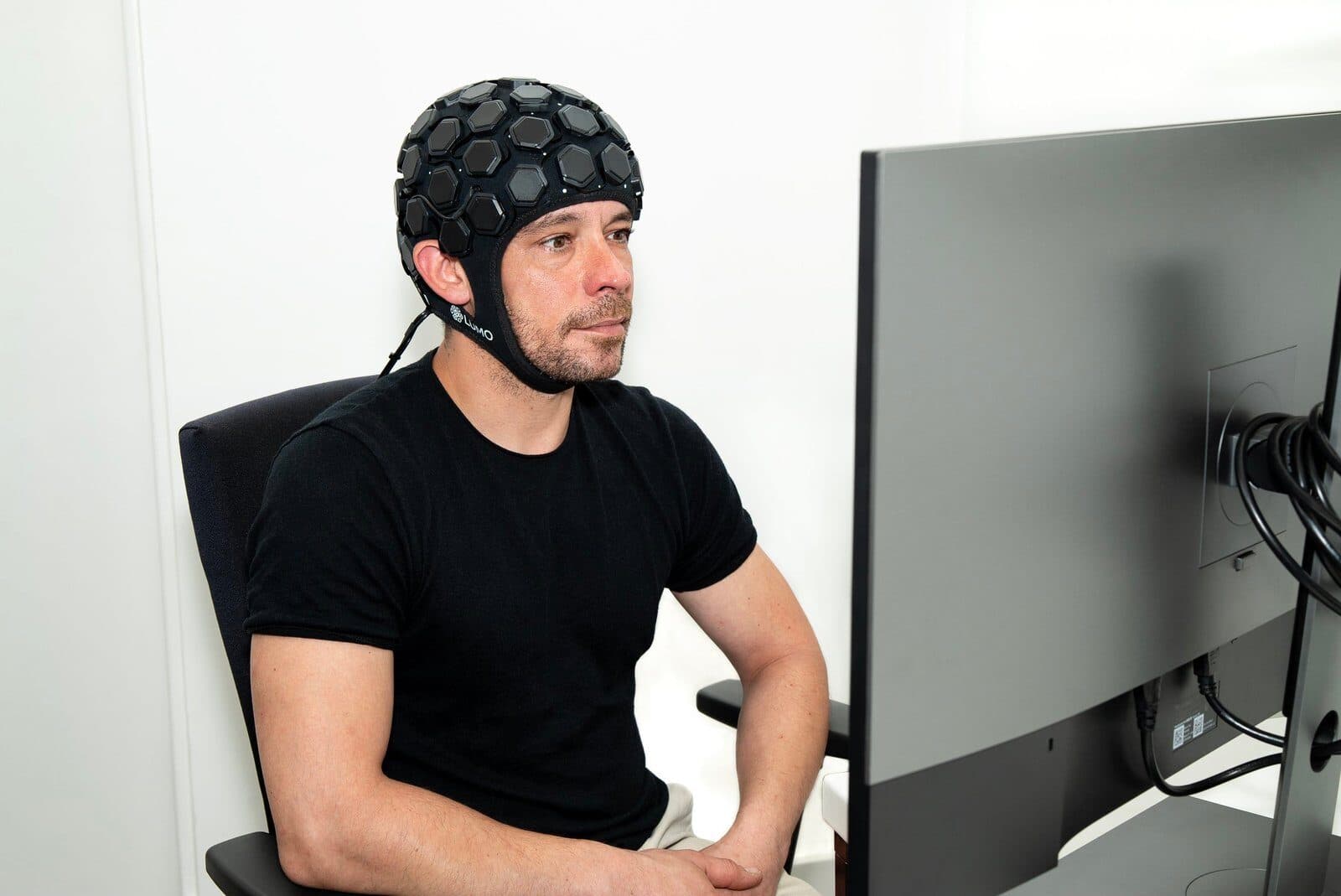
An fNIRS/DOT measurement requires the child to wear equipment such as a cap and glasses. For a child with sensory sensitivities, this equipment can be uncomfortable. The result is a vicious circle: the child either cannot take part in the study at all, or the quality of the data collected drops. This leads to research that does not represent them well enough, and so to “typical” results that in fact reflect only the children who adapt easily to the equipment.
How was the study designed?
The researchers built a platform that combines virtual reality (VR) with optical tomography (DOT) to make it gamified and engaging for children; the device is based on Gowerlabs technology. 54 children aged 3–7 took part in three groups — neurotypical children, children with a high likelihood of ADHD, and autistic children — and each child was tested twice. The two visits mattered for seeing whether engagement was a one-off or changed over time.
Findings
Children in the neurotypical and ADHD groups showed high and stable engagement; task completion and tolerance of the equipment were close to ceiling. In the autistic group, the picture was far more variable. The deciding factor was equipment-related sensory sensitivities — especially to the shutter glasses and the cap. Moreover, these sensitivities persisted at both visits despite targeted adaptations.
Parents’ views confirmed this picture: expected and experienced concerns about the equipment differed markedly between groups and remained high among the families of autistic children at both visits. In parallel, signal quality was lower in the autistic group and declined between visits; one reason was the cap loosening over time on more sensitive children.
The solution: personalising to the child
The study’s real contribution is not a criticism but a proposed solution: an approach adapted to the child instead of “one size fits all”. Based on iterative co-design with parents and collaboration with the device manufacturer (Gowerlabs), the researchers developed a four-stage personalisation framework. The framework covers preparation before the visit, adaptations within the session and direct engagement with the device developers. The aim is simple but powerful: to be able to flex the protocol and the equipment to each child’s needs.
Why does it matter?
This study provides the first evidence base for inclusive wearable neuroimaging in neurodivergent children, and a repeatable framework that other teams can apply too. The message is clear: more inclusive research means more representative data. In other words, it is the way to look for early developmental markers truly for every child, not only for those who adapt to standard equipment.
This article describes a preprint; the study has not yet undergone independent peer review. The findings should be considered with this in mind.